
Think in three connected decisions
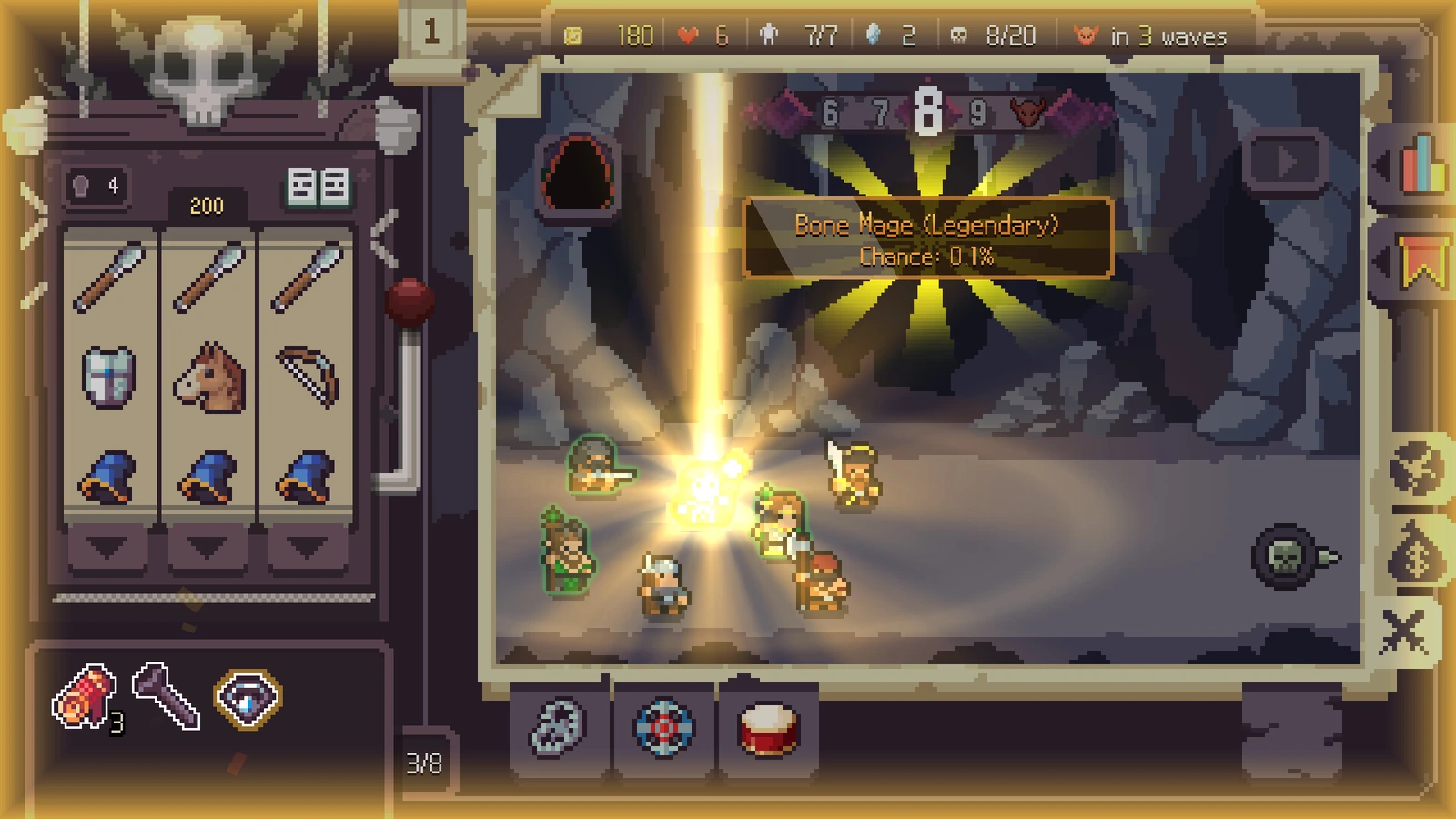
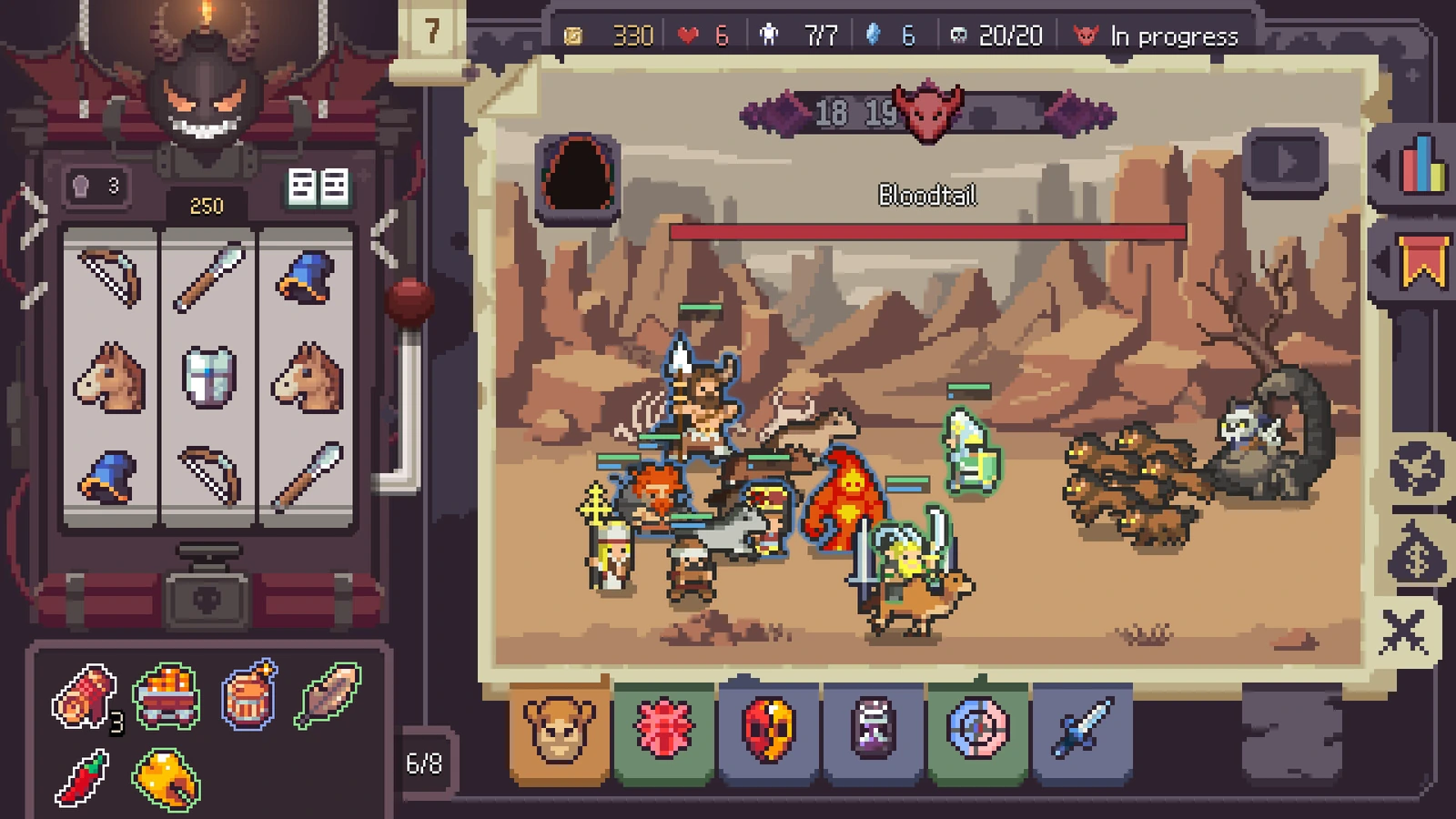
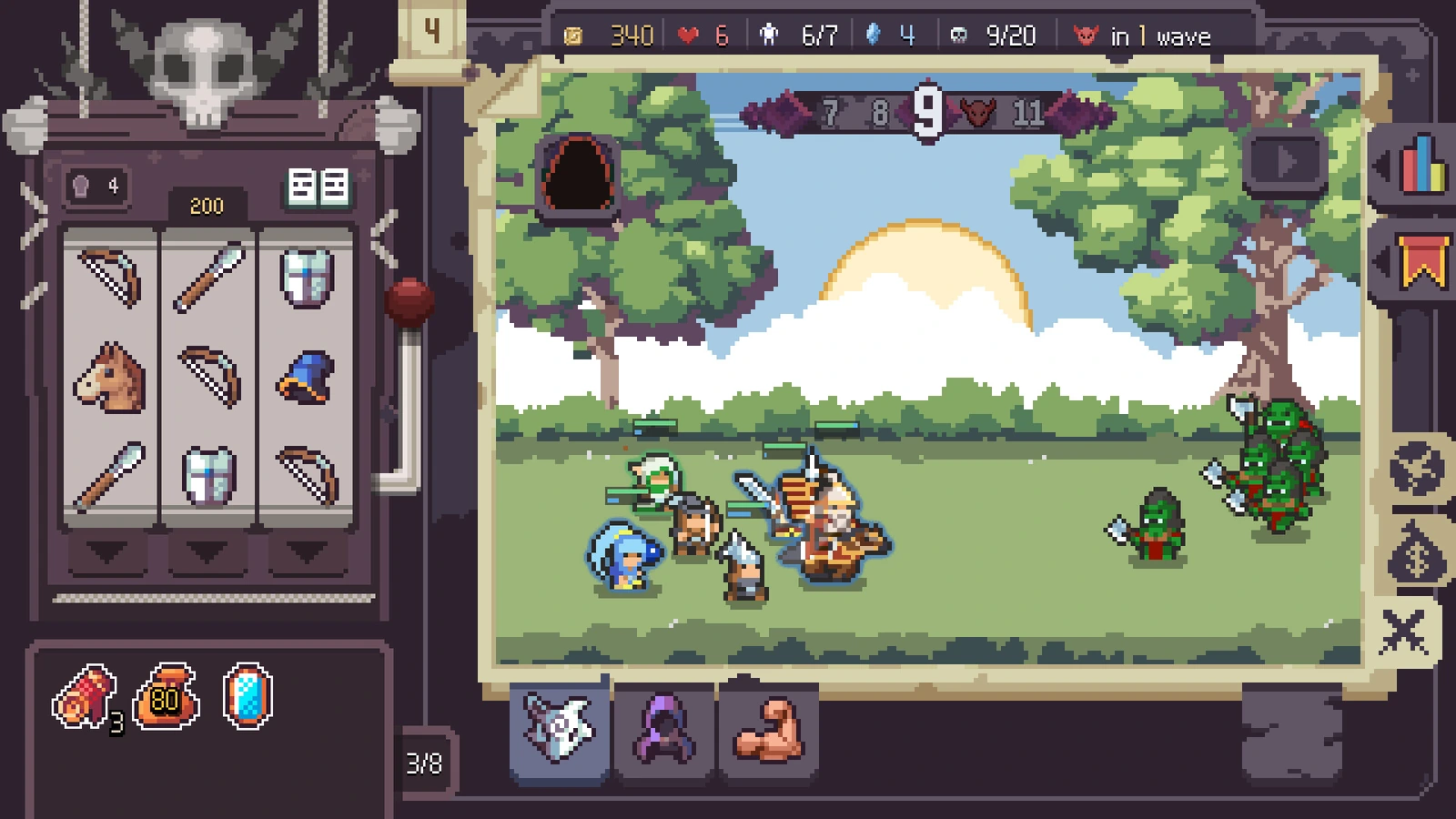
Slotbound asks you to prepare an army through a three-by-three slot machine, then watch that preparation face enemy waves. A matching line supplies a unit; that unit becomes a possible army member or a donor for another unit. The next choice is therefore larger than whether a spin won. Ask what arrived, what role is missing and which existing unit deserves the investment.
Treat an opening as a small, evolving plan. A unit that contributes now buys more time to find a specialised branch later. You do not need the final team’s rarest member before the first useful upgrade.
Give each army member a job
Inspect which units are actually engaging enemies and which are waiting behind the fight. Keep a damage source, enough durability to let it work and support that reaches a useful target. Those are jobs, not mandatory class names. The traits and effects on the particular copy can change what it is worth keeping.
Before absorbing a unit, identify the contribution you would lose. A donor that looks weaker in isolation may be protecting a carry, adding a different Forest type or helping an ally’s next skill happen sooner. Compare that loss with the recipient’s actual gain.
Read the price icon as well as the number
The annotated 0.4-era run distinguishes gold spent on spins from a separate blue resource used for shop decisions and Core rerolls. A large balance in one counter is not permission to spend the other freely. Look at the cost displayed on the next action, then decide what that action is trying to improve.
A reserve is useful only when it serves the army. Do not import the recorded player’s 500-gold preference as a universal interest formula or refuse a survival improvement merely to preserve an arbitrary screenshot number. Spend to solve the problem your current wave is exposing.
Make absorption a deliberate investment
Choose the unit you intend to keep before looking for something to feed it. The absorption prompt is your pause to compare the proposed effect with the displayed level conversion. Check the names on both sides and cancel if the direction is wrong. Dragging to reposition and entering an absorption decision are different actions.
For the next checkpoint, use the gain shown by your own prompt. A recorded +8 conversion is an example, not a rule for every donor. If the recipient needs a particular effect instead, read that effect’s target and timing before trading it for levels.
Transition when the rare unit is real
Jester is a Special-rarity addition from the 0.4.0 update. It is a tempting destination, but it should not stop the opening army from growing. In the community example, the existing Forest group handles much of the run before Jester finally appears. The actionable lesson is to keep the present team useful while pursuing another opportunity.
When the unit arrives, reassess donors rather than consuming everything. A cooldown-support branch needs allies with skills worth accelerating. Sacrificing those allies to inflate one recipient can remove the very reason you wanted the support class.
Make one check before starting the next fight
Look at reach and conditions before committing to a boss. A strong item or support skill still needs a valid target. The recorded Hunting Mask example is especially useful because the player later identifies a range problem: the intended effect is not secured merely by copying the item name.
After a loss, keep one question for the next attempt. Did the army lack damage, lose its front too quickly, spend for a unit that never appeared or fail to put an effect in range? Change the part you can identify rather than replacing the entire plan at once.
THE NEXT USEFUL CHECK
Before the next choice.
Page-only preparation checks. Reloading clears these ticks.QUICK ANSWERS
One more useful detail.
Should a beginner start on Hard to get more Jester opportunities?
Our learning route starts where you can understand and sustain the army. A player’s Hard-run experiment is not a universal first-run recommendation.
Is the 3×3 machine a nine-position army board?
No. The verified 3×3 description refers to the reels. It does not establish a nine-slot battlefield or nine-unit capacity.
THE SOURCE DESK / DEMO 0.4.1 CONTEXT
The reference behind
the next decision.
The publisher establishes the demo systems and updates. Detailed unit and effect examples are attributed 0.4-era observations. Our build plans and tier letters are editorial learning advice, with no claimed playtest or damage benchmark.
Open the references and their scope
- PublisherOptima Arch — official Slotbound Demo ↗
The 3×3 machine, absorption, Random Stats, Imprints, Items and Cores; demo identity.
- PublisherDemo 0.4.0 — The Jester Arrives ↗
Jester, Deep Cave through Normal, faction beta, Awakening, item rework, controls and planned Early Access.
- Independent guideSlotbound Hub — beginner worked example ↗
An attributed reading of Dabble’s run, including separate currencies, a late Jester transition and its anomalous reported result.
- Independent guideSlotbound Hub — donor and recipient reference ↗
Absorption direction, displayed level gains and lock-state checks.