CHOOSE BY TASTE
Your next run, at a glance.
Our broad action pick
Best for combo mathematics
Best for deliberate deckbuilding
Best for 2D action mastery
Best starting point for its story
Best for co-op build escalation
Best for dangerous experimentation
Best for immersive sci-fi shooting
Best for bullet-pattern combat
Best bridge from Survivors builds
Our broad action pick
Hades II
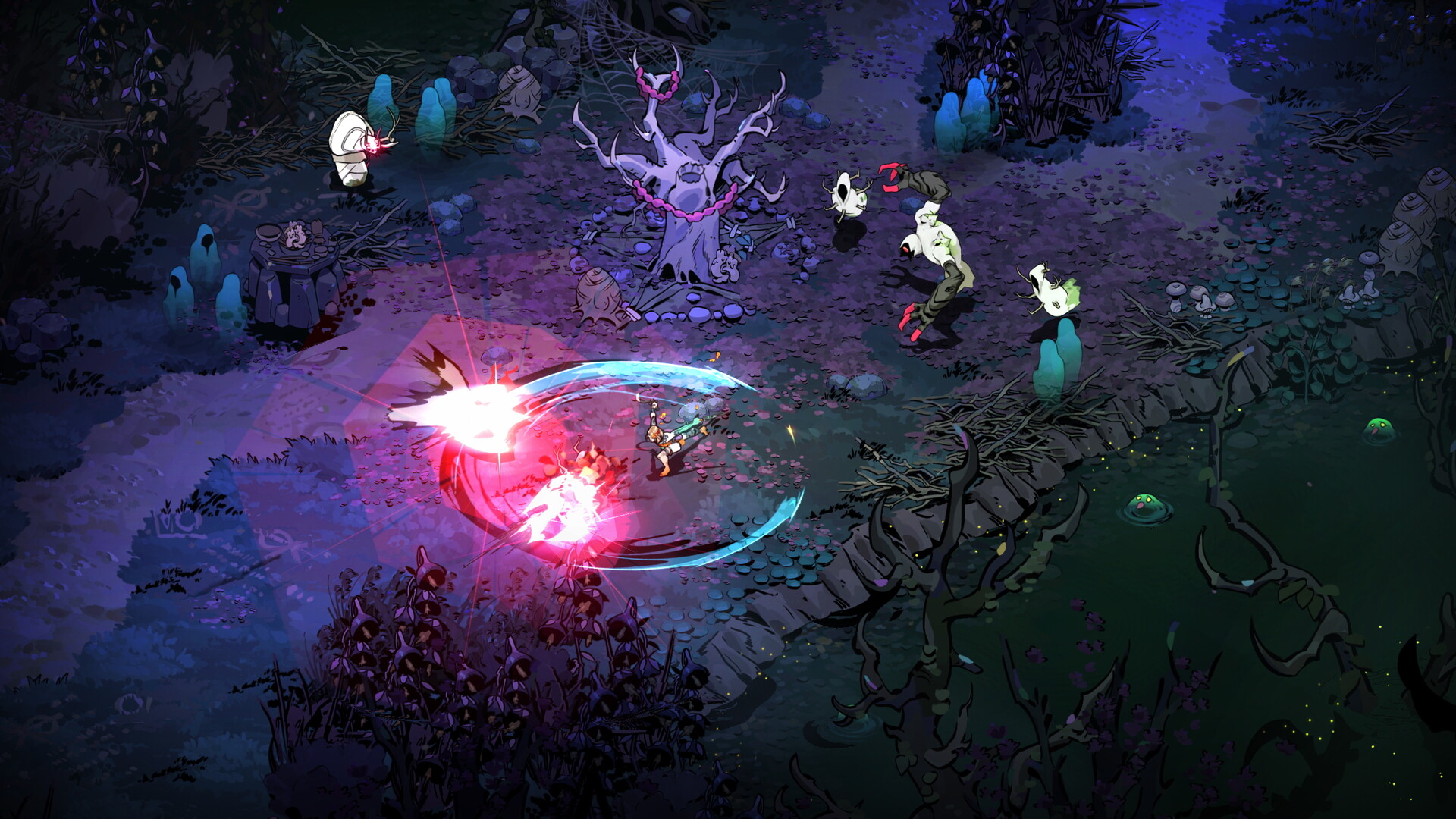
Players who want action, evolving builds and a story that continues between attempts.
Hades II pairs repeated action runs with a continuing mythological story. You take the Princess of the Underworld into battles against the Titan of Time, combining weapons, magick and divine Boons. Between attempts, permanent upgrades and other progression systems give you more ways to prepare. The released game includes God Mode for players who want support while following the story.
Why it makes our list
We put it first because it offers several reasons to return at once: the next combat combination, another conversation and a larger objective beyond a single successful room. That makes it our broadest action recommendation here. The interesting choice is how a weapon and its Boons work together, rather than collecting every available bonus. It also gives this list a contemporary, fully released starting point instead of treating its former Early Access status as current.
The tradeoff
Choose something else if you mainly want quiet planning or a run with very little dialogue. Its action demands attention, and the surrounding story and upgrade systems are part of the package.
Best for combo mathematics
Balatro
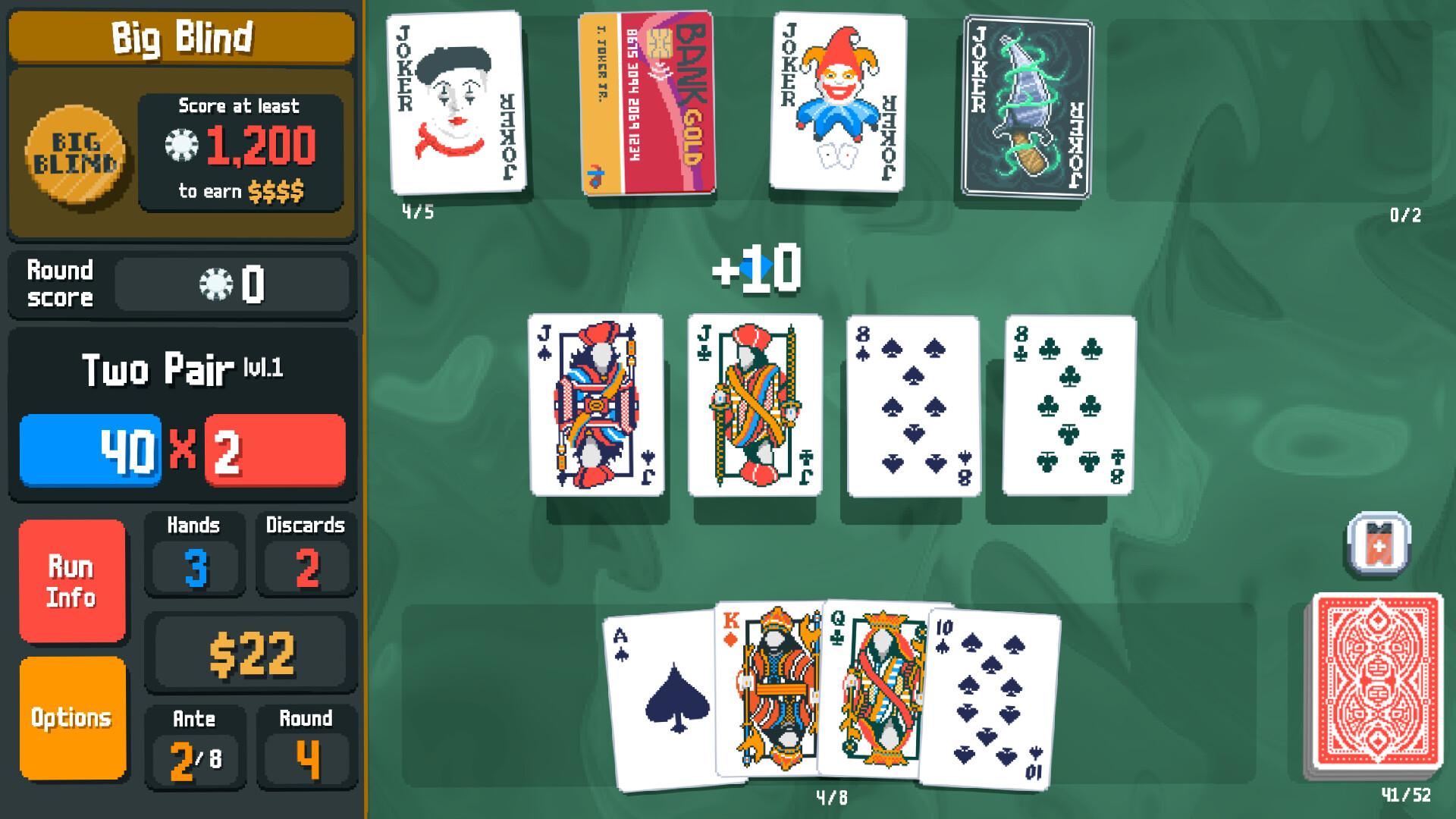
Players who enjoy building synergies, weighing discards and watching a coherent plan produce bigger numbers.
Balatro turns familiar poker hands into the ingredients for a scoring machine. You clear escalating blinds, improve your deck and combine Jokers with other modifiers. The goal is to make the cards you can reliably draw produce enough chips. Different decks, challenge runs and difficulty levels create reasons to reconsider a strategy after the first victory.
Why it makes our list
It takes second place because its central question is unusually compact: what makes this particular hand valuable in this particular build? A nominally strong poker hand can be less useful than a modest one supported by the right combination. Our recommendation is to approach it as a game about interacting rules and risk, rather than a poker simulator. It provides the clearest change of pace from the action-heavy games around it without abandoning the pleasure of assembling an outrageous run.
The tradeoff
The appeal depends on enjoying numerical decisions and card combinations. If your main reward is exploration, character dialogue or movement mastery, a high score alone may not provide the same motivation.
Best for deliberate deckbuilding
Slay the Spire
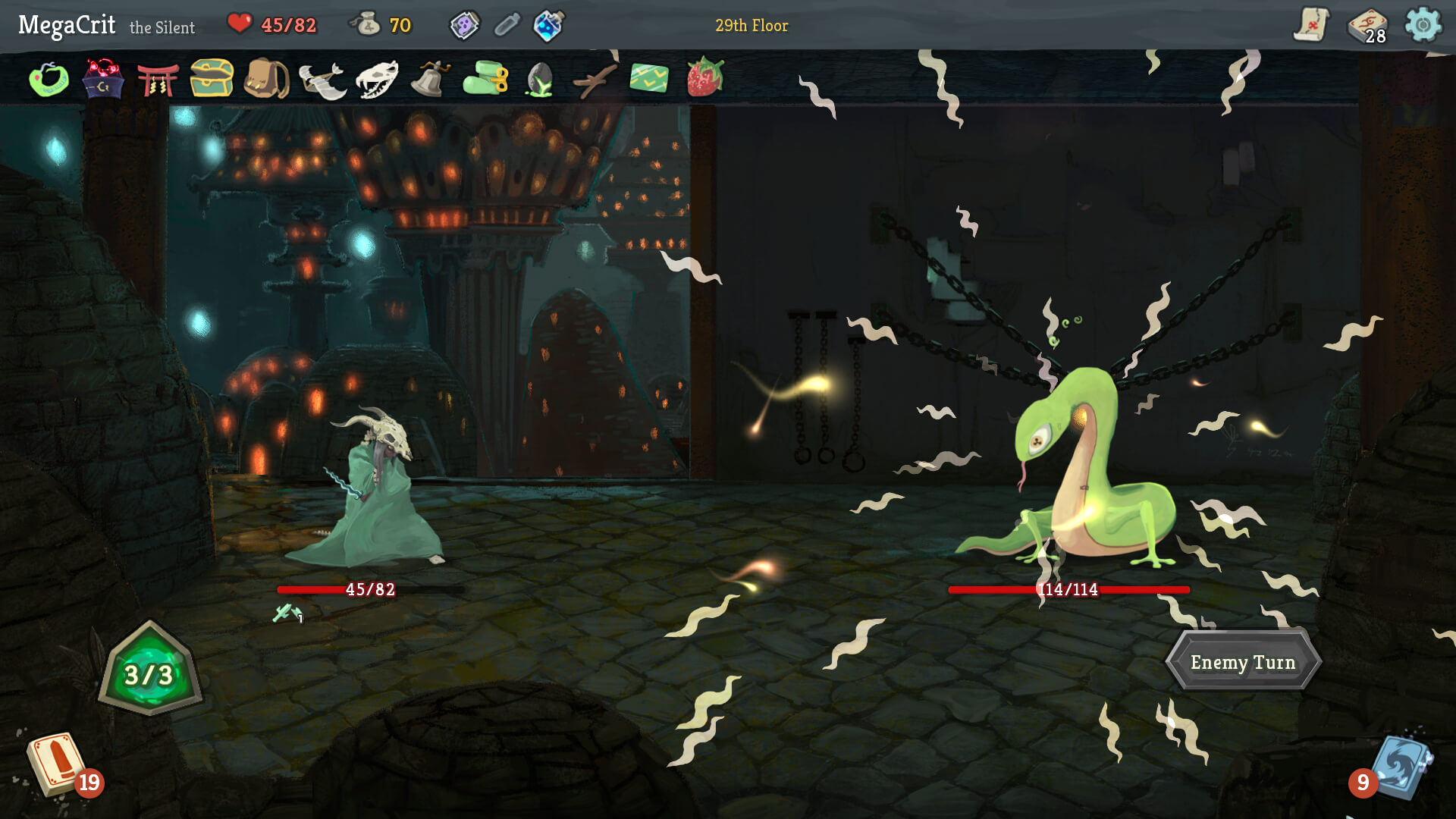
Thoughtful players who want card choices, relic interactions and route decisions without reflex-heavy combat.
Slay the Spire makes the journey itself part of your deckbuilding problem. Choose a character, add cards, collect relics and decide which route to take through an ever-changing climb. Battles and events ask different questions of the same deck, so a choice that helps immediately can leave a weakness for later. Its four characters supply different starting points for learning those decisions.
Why it makes our list
We rank the original third for its focused combination of route planning and turn-based combat. It is a useful recommendation when someone wants to understand why a run succeeds, rather than simply execute faster next time. Picking another card is a decision about the whole deck, not an automatic reward. We deliberately retain this finished game while Slay the Spire 2 develops in Early Access; the sequel is not being treated as nonexistent or silently substituted here.
The tradeoff
Progress depends on learning interactions and planning around uncertainty. Players looking for continuous action or automatic permanent power increases may prefer another entry.
Best for 2D action mastery
Dead Cells
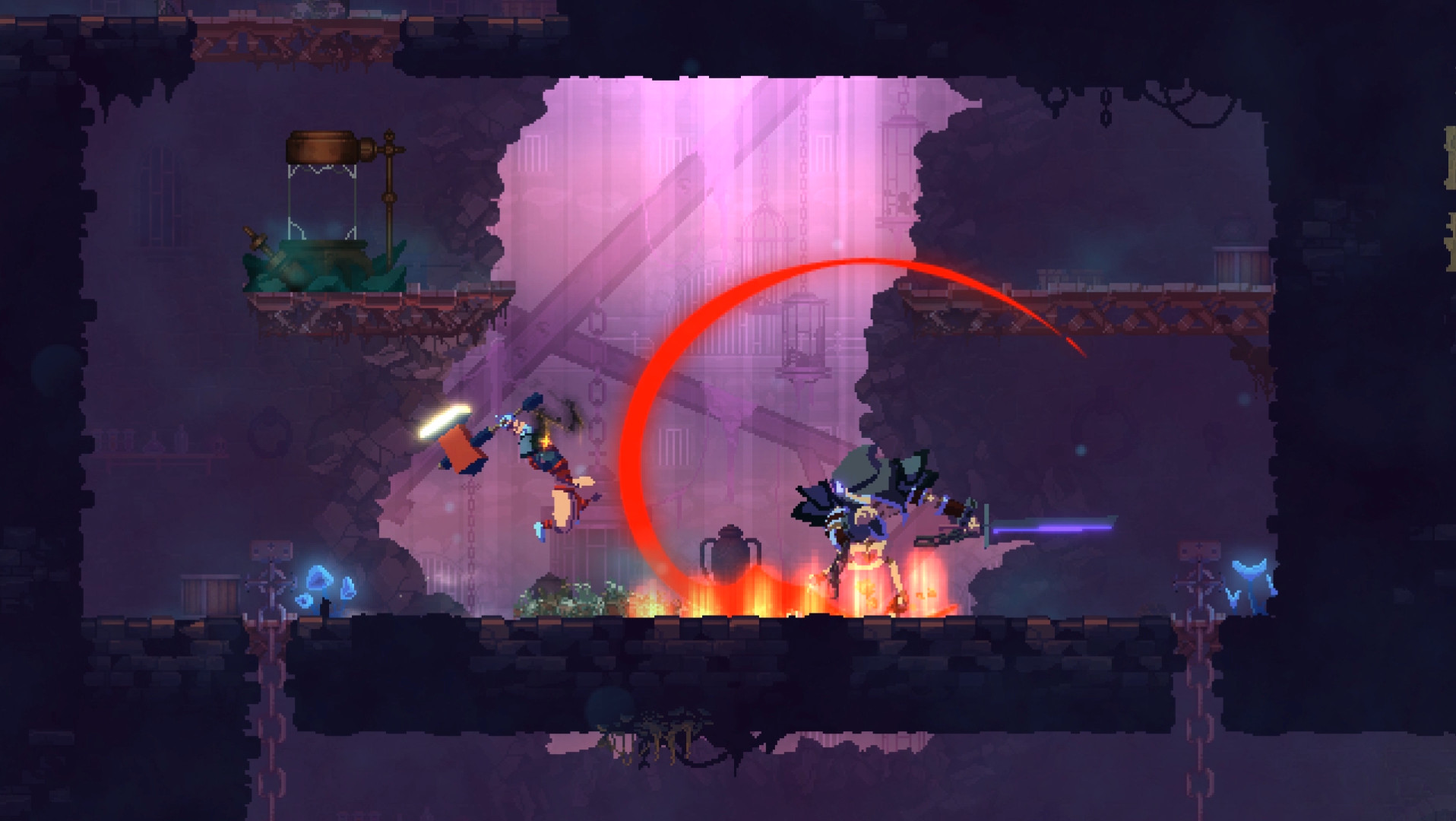
Players who want branching exploration, varied equipment and a demanding side-scrolling combat loop.
Dead Cells combines side-scrolling combat with an interconnected island, branching routes and unlocks that survive between attempts. The body you inhabit is expendable: losing it sends you back to begin another journey. Weapons, abilities and route access give you new possibilities, while the current attempt still asks you to survive its fights.
Why it makes our list
It earns fourth place by making the case for a different kind of action game from Hades II. Here, moving through platforms and passages sits alongside the combat decisions. Our reason to recommend it is that combination of route knowledge and execution: discovering another way forward matters, but so does handling the enemies along it. It suits the player who wants an expanding toolbox without losing the tension of carrying a run through dangerous encounters.
The tradeoff
Unlocking options does not remove the need to learn combat. If restarting a demanding route sounds frustrating, choose a game whose storytelling or turn-based decisions provide a stronger personal reason to retry.
Best starting point for its story
Hades
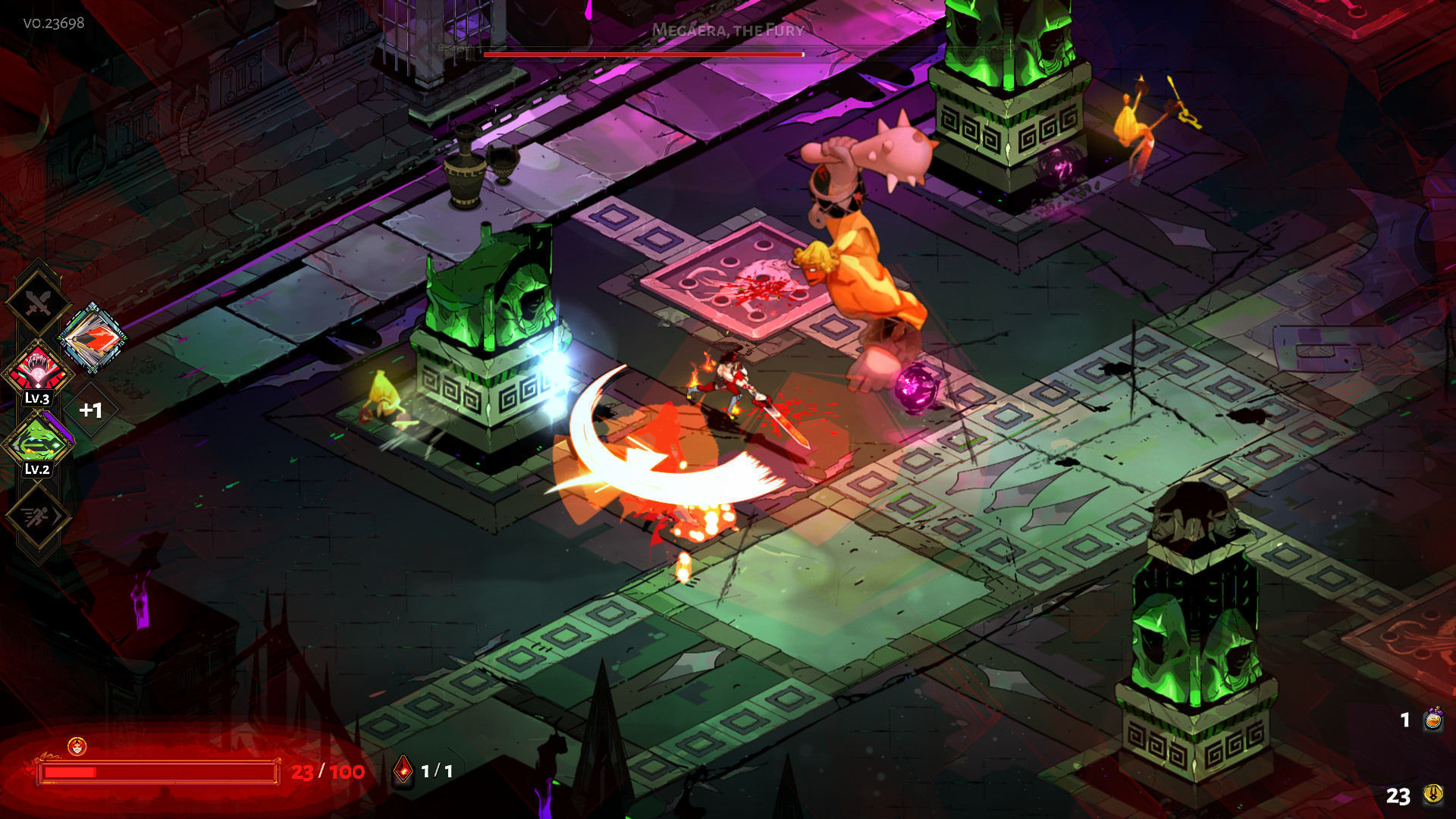
Newcomers who want the original Underworld story alongside weapon-and-Boon action builds.
The original Hades follows Zagreus trying to escape the Underworld. Choose a weapon, shape the attempt with Olympian Boons and return to a household of characters when it ends. The Mirror of Night provides permanent progression, while repeated journeys reveal more of the relationships behind the escape. That structure makes returning home part of the adventure rather than merely a restart screen.
Why it makes our list
Keeping both Hades games is a deliberate choice. Hades II is our broader current action pick, while the original introduces this family and its conflicts from their earlier starting point. We place it fifth because it remains a clear recommendation for someone who values the story’s order as much as the next build. The appeal is the connection between a changing combat setup and an ongoing reason to talk to the people waiting after it.
The tradeoff
Readers who want maximum variety across their purchases may choose only one Hades game first. If character conversations are a distraction from the next run, look toward Dead Cells or Gungeon.
Best for co-op build escalation
Risk of Rain 2
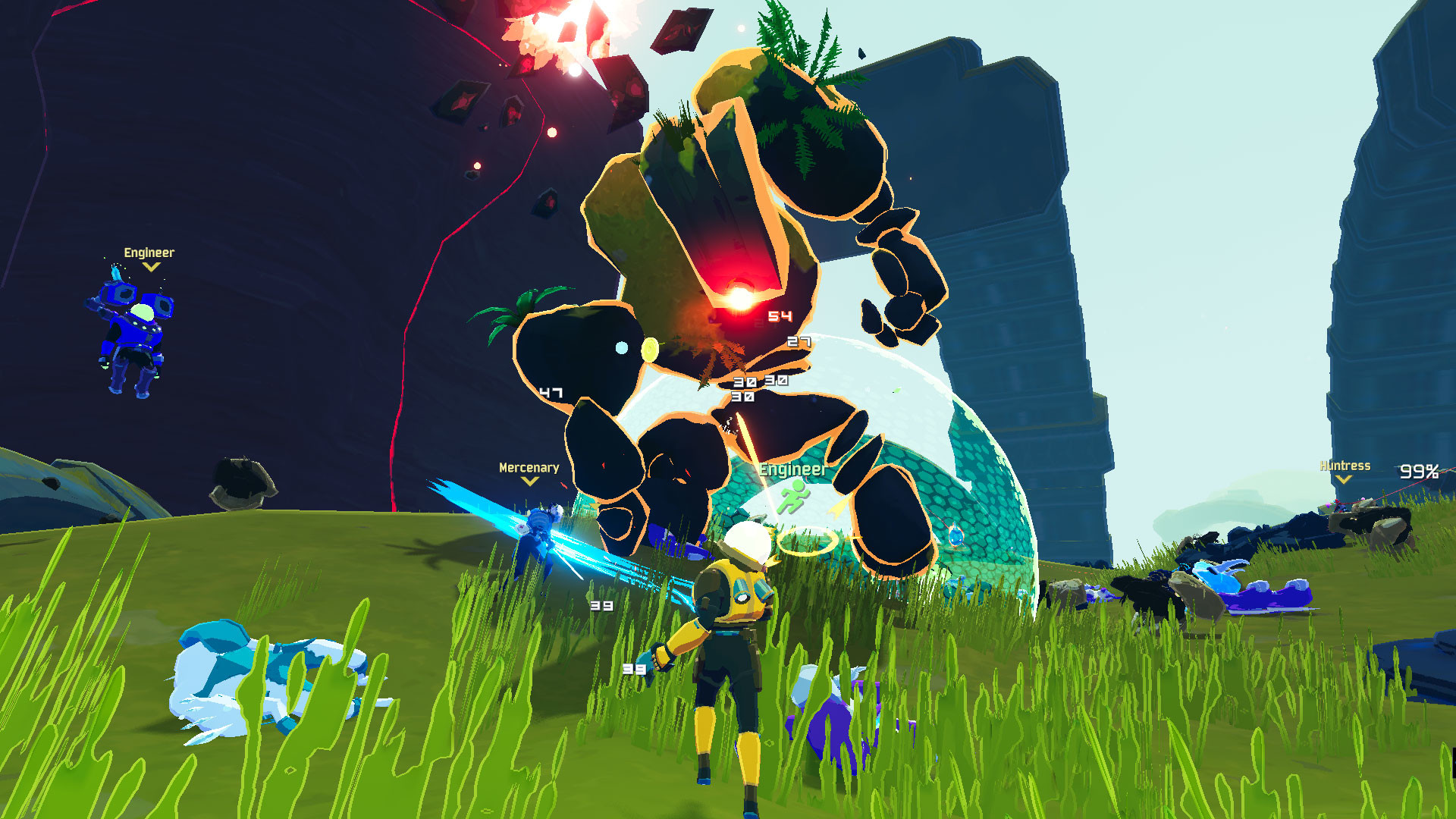
Friends who want online co-op, distinct characters and increasingly elaborate item combinations.
Risk of Rain 2 takes the item-combination loop into third-person action on an alien planet. Play alone or with up to three friends in online co-op, discover equipment and learn survivors with different combat styles. As the run develops, the scaling system increases the power of both players and enemies. You can work toward escaping or continue to see how far the attempt goes.
Why it makes our list
It occupies sixth place as our strongest recommendation here for a group wanting to create a chaotic run together. Item interactions give the team something to discuss beyond which enemy to shoot next, and different survivors provide reasons to change roles between attempts. For a Survivors reader, it is an appealing step toward more direct aiming and movement while retaining the attraction of a build growing into something much larger than its starting kit.
The tradeoff
Escalation can also make a fight harder to read. Choose it for active third-person combat and growing complexity, rather than the clean turn-by-turn explanations of a deckbuilder.
Best for dangerous experimentation
Noita
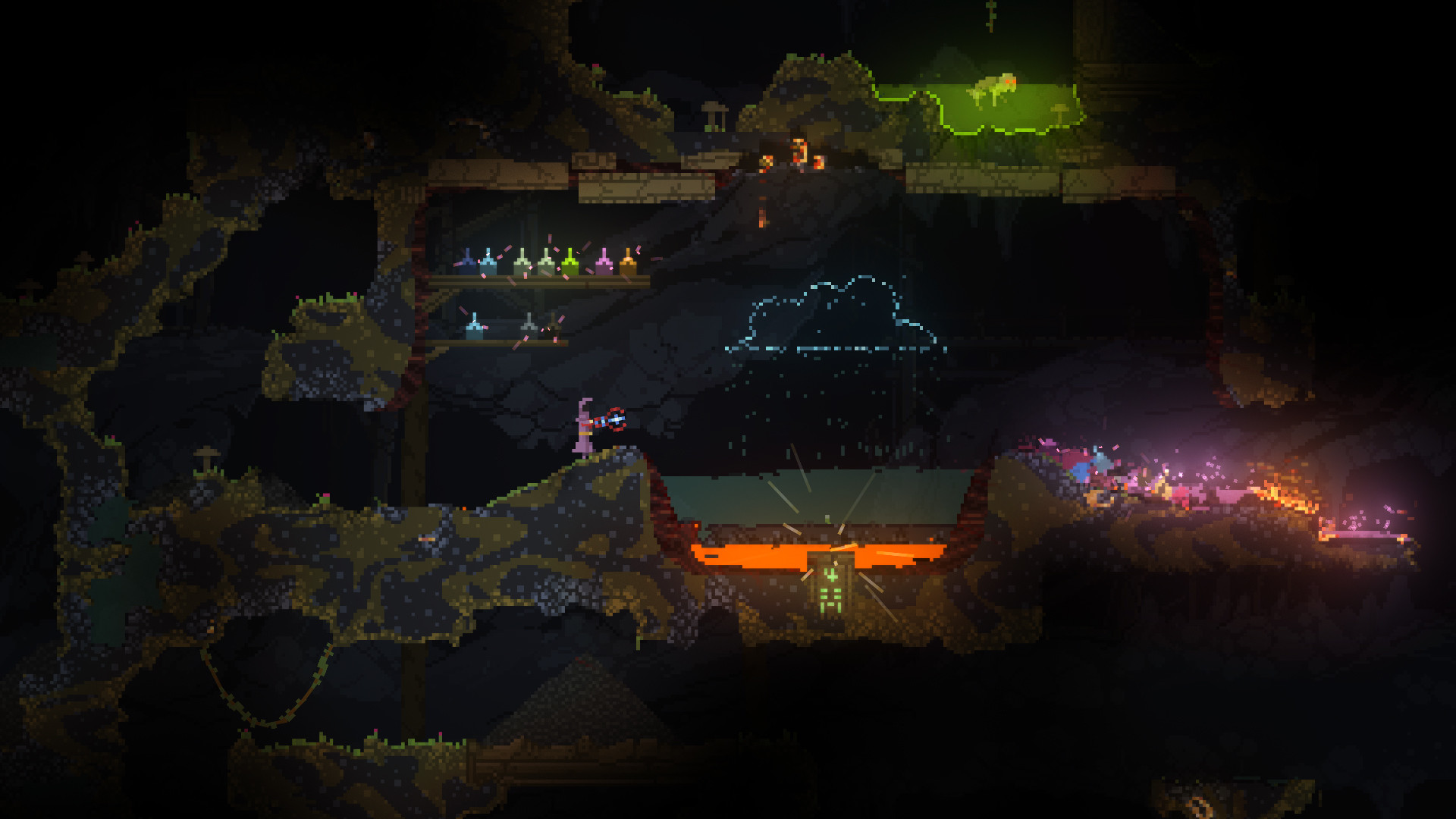
Patient experimenters who enjoy spell combinations, reactive environments and learning through risky discoveries.
Noita puts a spell-building wizard in a world whose pixels participate in a physical simulation. Fire, liquids and destructible terrain become tools and hazards as you explore procedurally generated environments. Combining spells changes what your magic does, while permanent death makes understanding the world important to the next attempt. The central attraction is what happens when your tools meet the surroundings.
Why it makes our list
Seventh place reflects a particularly strong match for curious players, rather than a universal starting recommendation. We value how its simulation gives a build consequences outside a simple damage number: the space around a fight can change along with the fight itself. Someone who wants to ask “what happens if I combine these?” has a different reason to return than someone chasing a familiar boss pattern. That experimental identity earns its place in this selection.
The tradeoff
Unpredictable interactions and permanent death make experimentation costly. If you want a forgiving introduction or an obvious explanation after every setback, begin elsewhere and return when discovering rules sounds like the reward.
Best for immersive sci-fi shooting
Returnal
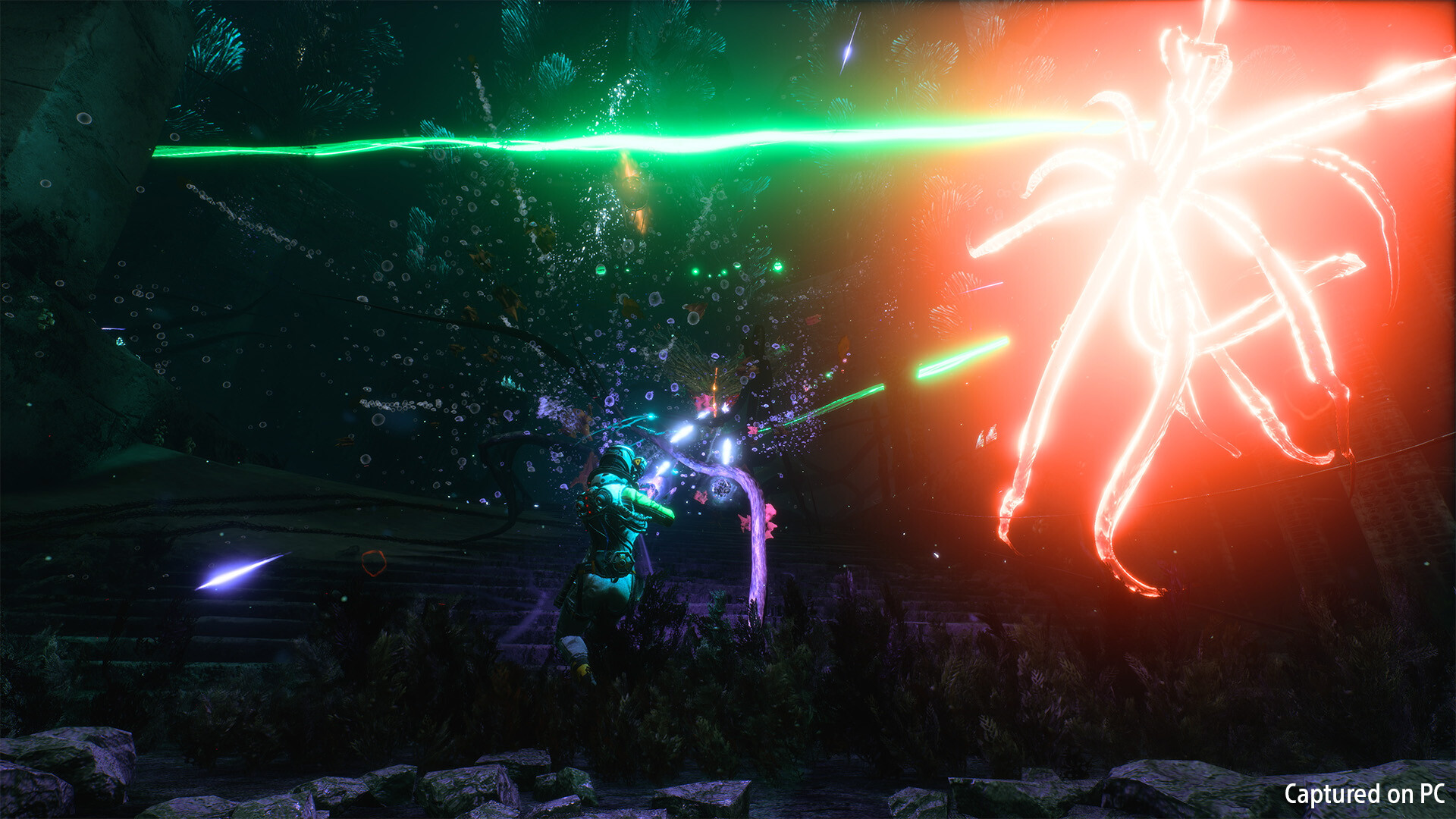
Players who want demanding third-person combat, a mysterious setting and a substantial audiovisual presentation.
Returnal follows Selene through repeated cycles on Atropos, combining third-person shooting, exploration and a fragmented science-fiction story. Changing equipment and environments shape subsequent attempts. The PC edition includes Suspend Cycle and Photo Mode, online co-op for the main journey, and the separate Tower of Sisyphus combat challenge. The tower is not a co-op mode.
Why it makes our list
We place it eighth because it offers the most overtly cinematic shooter alternative in this particular group. Its appeal is not simply a larger pile of modifiers: it pairs bullet-pattern combat with a hostile setting and questions about Selene’s situation. That makes it worth considering for someone who normally seeks atmosphere in a story-driven action game but wants the uncertainty of repeated runs. It is a more specific recommendation than the lighter-looking card and pixel-art entries above it.
The tradeoff
The intensity and unsettling setting will not suit every session. Check the PC requirements for your machine, and remember that PC co-op does not provide cross-play with PlayStation 5.
Best for bullet-pattern combat
Enter the Gungeon
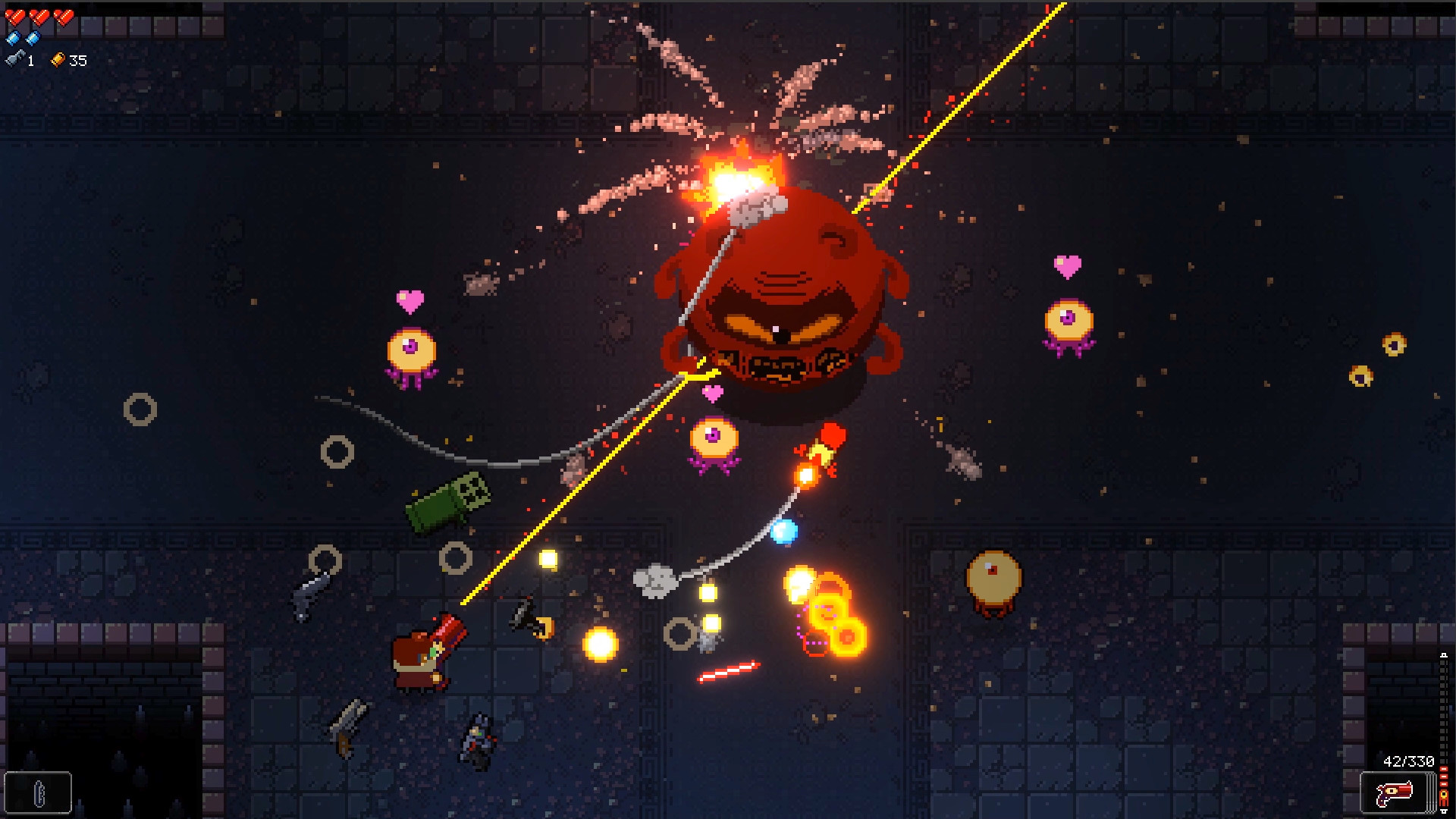
Players who enjoy aiming, learning projectile patterns and adapting to an eccentric collection of guns.
Enter the Gungeon sends an unlikely hero through a changing labyrinth of gun-themed enemies, traps and bosses. You aim, shoot, dodge roll and use available cover while collecting weapons with very different behavior. Its floors combine designed rooms with procedural arrangement, and shops and hidden discoveries create choices beyond the next exchange of fire.
Why it makes our list
At ninth, it is our focused pick for readers who want active bullet-hell survival rather than automatic weapon fire. The changing arsenal supplies novelty, but the player still has to read the room and find a way through incoming patterns. We like its place beside Vampire Survivors because the contrast is useful: both fill the screen with danger, yet they ask you to control different parts of the action. Its absurd guns also give a new discovery an immediate identity.
The tradeoff
An interesting weapon does not substitute for dodging and positioning. Readers seeking a mostly build-selection-driven loop may prefer Vampire Survivors, while those wanting extensive character storytelling should start with Hades.
Best bridge from Survivors builds
Vampire Survivors
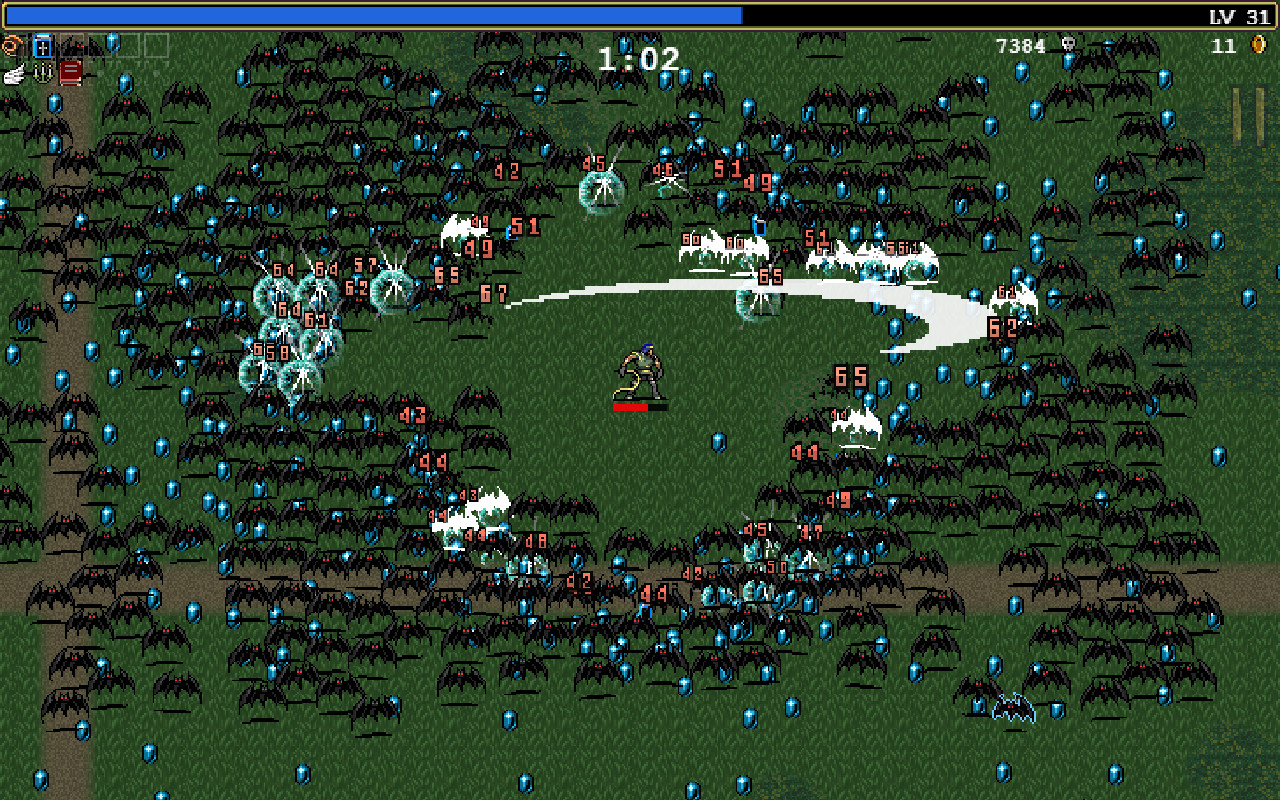
Survivors fans who want automatic-weapon build planning and movement decisions against increasingly dense crowds.
Vampire Survivors centers on surviving a growing crowd, collecting experience and choosing upgrades that help your character endure. Its minimal control burden moves attention toward positioning and the way a collection of weapons develops. Gold gathered in runs can fund upgrades for later attempts, giving the next survivor a different starting position.
Why it makes our list
It completes the list as the most direct next stop for readers interested in Azeroth Survivors-style build discussions. The shared attraction is making choices that eventually change how you move through a crowd. We put it tenth to keep this selection broad, not to imply that its more concentrated loop is less worthwhile. If the fantasy of turning an initially fragile character into a screen-clearing engine is your main priority, this can be your personal first pick instead.
The tradeoff
Its restrained starting premise and repeated crowd-survival structure may offer less appeal to someone seeking authored dialogue, platform exploration or manual aiming. The right question is whether building and steering the engine is enough.
THE REASONS BEHIND THE ORDER
How we chose.
Reviewed on 30 October 2026 against official Steam store descriptions and publisher information. We considered the central run loop, the kinds of decisions it creates, its distinct place in this selection and the likely tradeoff for a new reader. This is original, source-informed editorial judgment, not a claim that we benchmarked or completed all ten games. We use “roguelike” in the broad discovery sense, including roguelites, deckbuilders and survivor-style games; this is not a list of traditional turn-based roguelikes. Screenshots come unchanged from official Steam galleries and may depict earlier builds. Prices, review totals and imagined playtime do not determine the order.
BEFORE YOUR NEXT RUN
Quick answers.
Are all ten traditional roguelikes? +
No. This is a broad run-based discovery list containing action roguelites, deckbuilders and a survivor-style game. If you specifically want turn-based movement on a grid and traditional roguelike rules, use a narrower list.
Which should I choose for a first game? +
Choose by the decisions you enjoy: Hades or Hades II for action with a continuing story, Slay the Spire for deliberate card battles, or Vampire Survivors for crowd movement and upgrade combinations. The highest number is not a substitute for that preference.
Why recommend the original Slay the Spire when the sequel exists? +
This selection deliberately includes the finished original. Mega Crit’s FAQ describes Slay the Spire 2 as a Steam Early Access game, launched 5 March 2026, while the first game is already a completed option. The sequel deserves a separate evaluation as it develops.
Were these screenshots captured by Cobalt Games? +
They are actual game screenshots supplied through the official Steam store galleries, downloaded unchanged and credited to their respective owners. They illustrate the games; they are not evidence that Cobalt performed a playthrough or benchmark, and some show earlier builds.
TAKE A BUILD INTO YOUR NEXT ATTEMPT
Already playing Azeroth Survivors?
Compare 18 original class builds, from Whirlwind Fury and Pyroblast Fire to trap, totem and Moonfire routes.
Find your class build →