
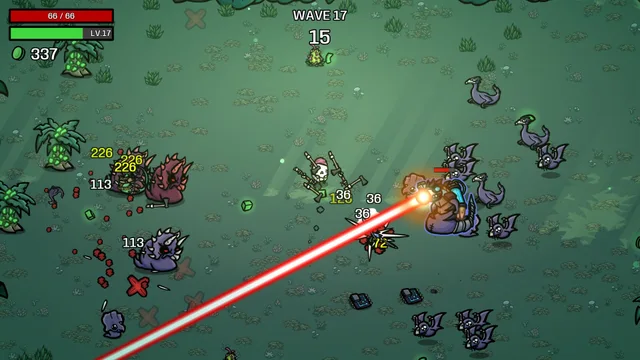
OBSERVE / 01
A line across your route
See where the visible attack is going before following the enemy you were chasing.
 PRIMAL DREAD
Cobalt Games / Primal Dread / Field note 03
READ THE ROOM / 3 MIN READ
Build a movement plan around the danger you can see. Learn the new visual language before turning every run into a damage contest.
THE SHORT VERSION
Look beyond the enemy you are currently targeting.
Find the next position before the current one narrows.
Check what can approach the destination you just chose.
FIELD OF VIEW
Three visual prompts, using genuine publisher captures. Observation aids, not hitbox or timing diagrams.
See where the visible attack is going before following the enemy you were chasing.
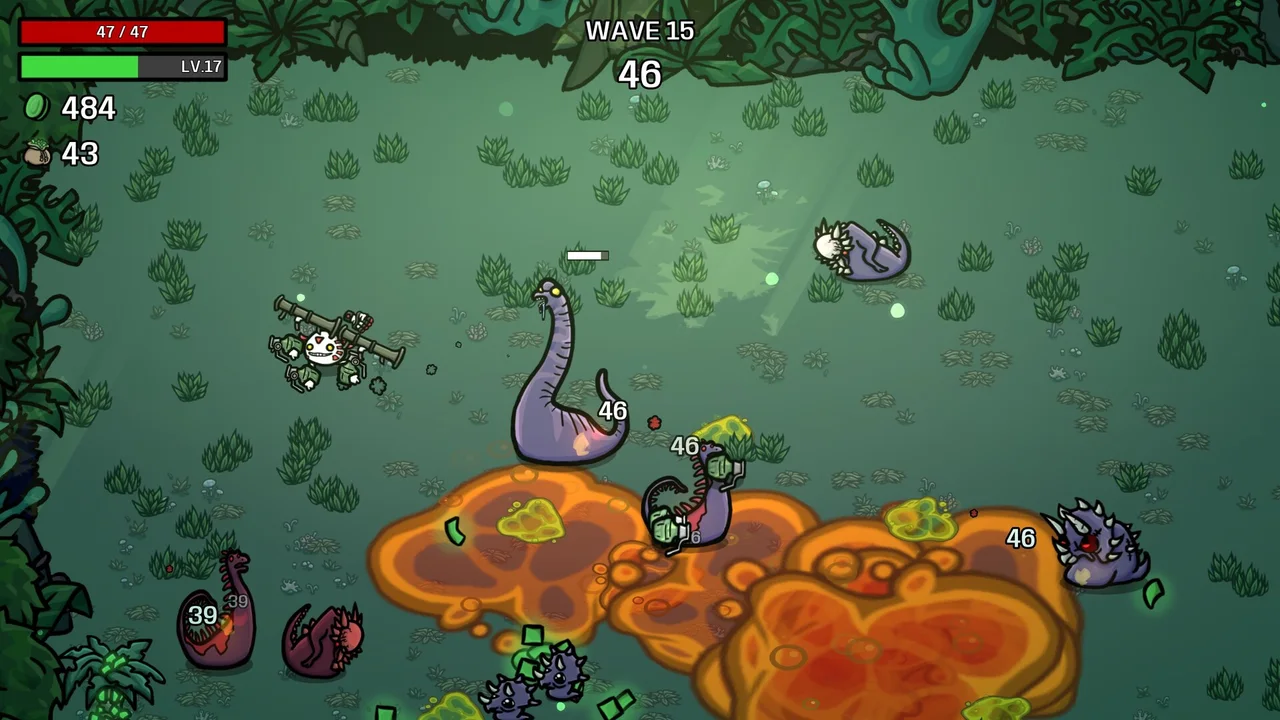
Inspect the clear boundary and the route you can take next.
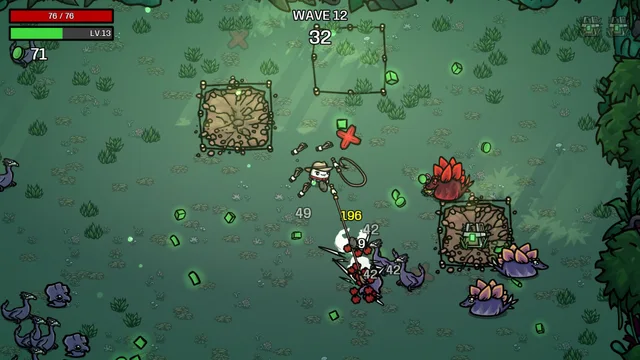
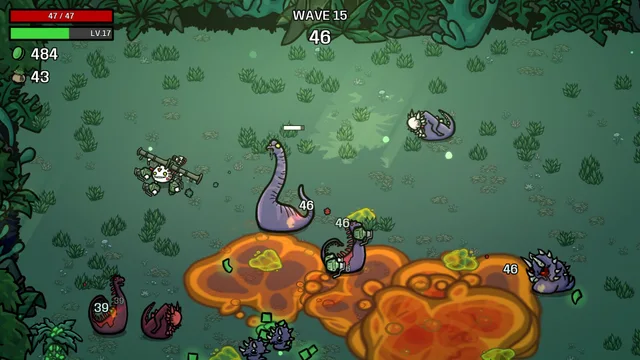
Look at what approaches the place you intend to dodge into.
The new jungle is more than a fresh background. The developer associates Mecha enemies with lasers and oil puddles, and Mutation enemies with acid. Official screenshots show busy arenas where several visual signals compete for attention. Our first-session advice is to learn which signals demand movement before trying to judge whether a build is exceptionally strong.
Choose a pace and difficulty that lets you notice the moment a position becomes uncomfortable. If every wave ends in a blur, you may learn little from surviving or dying. A useful introductory run is one where you can identify the threat that changed your route and describe a better response for next time.
| What you see | What to inspect | Planning response |
|---|---|---|
| A laser attack | Its visible direction and the space it threatens now. | Look for clear space beyond the immediate target you were chasing. |
| An oil puddle | Its visible boundary and the route it removes from your options. | Avoid building your entire escape plan through that patch. |
| An acid-covered area | Where the occupied ground ends and what is approaching the alternative lane. | Decide the next open position before the present one becomes crowded. |
This table deliberately gives observation prompts rather than exact hitbox, duration or damage claims. Those details need current-game evidence. Do not assume a familiar colour has the same behavior as a different enemy, map or earlier version.
A single successful dodge can still leave you in a worse position. When you see a threat, identify the immediate clear space and then the direction you will use if another group approaches. This small second step keeps movement from becoming a chain of panicked corrections. It also makes crowded moments easier to review afterward.
Do not aim for constant perfect routing. Watch for repeated traps instead: turning into a group you were not watching, following a desirable pickup through occupied ground, or reacting only after several routes have already closed. Fix the pattern you encounter most often before trying to optimize a rare, complicated situation.
If you repeatedly lose health in the same visual situation, another damage purchase may not be the first answer. Ask whether you saw the cue, understood the open route and acted while that route was still available. If one of those steps failed, practice it deliberately on the next attempt.
A build problem has a different signature: you understand where to go but cannot keep a route clear, or the same target repeatedly survives long enough to block the plan. Write that down in concrete terms before shopping. “The build is bad” gives you no useful next action; “I cannot remove the enemy closing this lane” does.
After a difficult wave, reconstruct the earliest decision that made the situation narrow. The final hit is often less informative than the moment you committed to a risky direction. Ask what you were looking at, what you were pursuing and which piece of open ground you gave up.
Then choose one adjustment for the next session. Examples include scanning outside a hunting area before entering it, leaving a tempting target earlier, or watching a new attack without chasing a pickup at the same time. Keep those as personal experiments. They are practical learning habits, not a claim that every enemy can be defeated by the same movement pattern.
BEFORE THE NEXT WAVE
0 / 5 steps checked
A FEW USEFUL ANSWERS
This guide does not publish unverified launch values, duration or stacking rules. Inspect the current game before planning around a numerical threshold.
No. They are publisher images of the game, not a complete rules reference or a Cobalt test recording.
Choose based on what you can read and manage in your present run. We have not measured a universal difficulty winner.
SOURCE REVIEW / 2 NOVEMBER 2026
Source review, before unlock. Officially announced systems, with our original planning advice. Exact launch values and unlock tasks await the released game.
THE NEXT USEFUL QUESTION
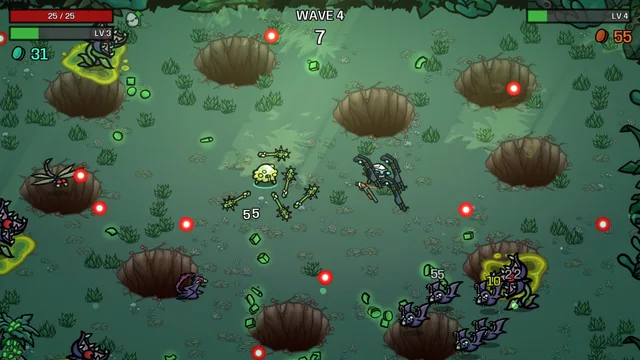 First session
What should I check in the game?
Turn the character screen into a plan you can finish. Track what the released game actually asks rather than chasing a guessed unlock list.
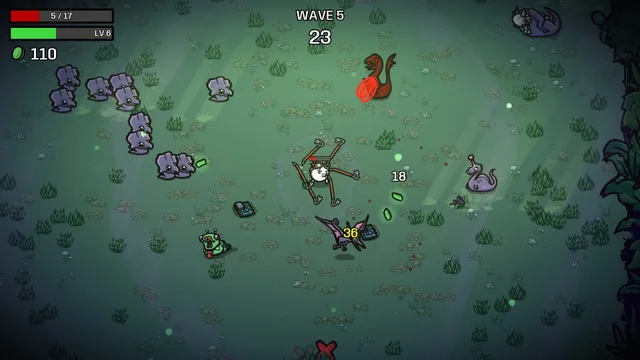 Build decisions
Does this offer solve my problem?
An interesting item becomes useful when you can explain its job. Build a readable loadout before chasing an unverified perfect combination.