
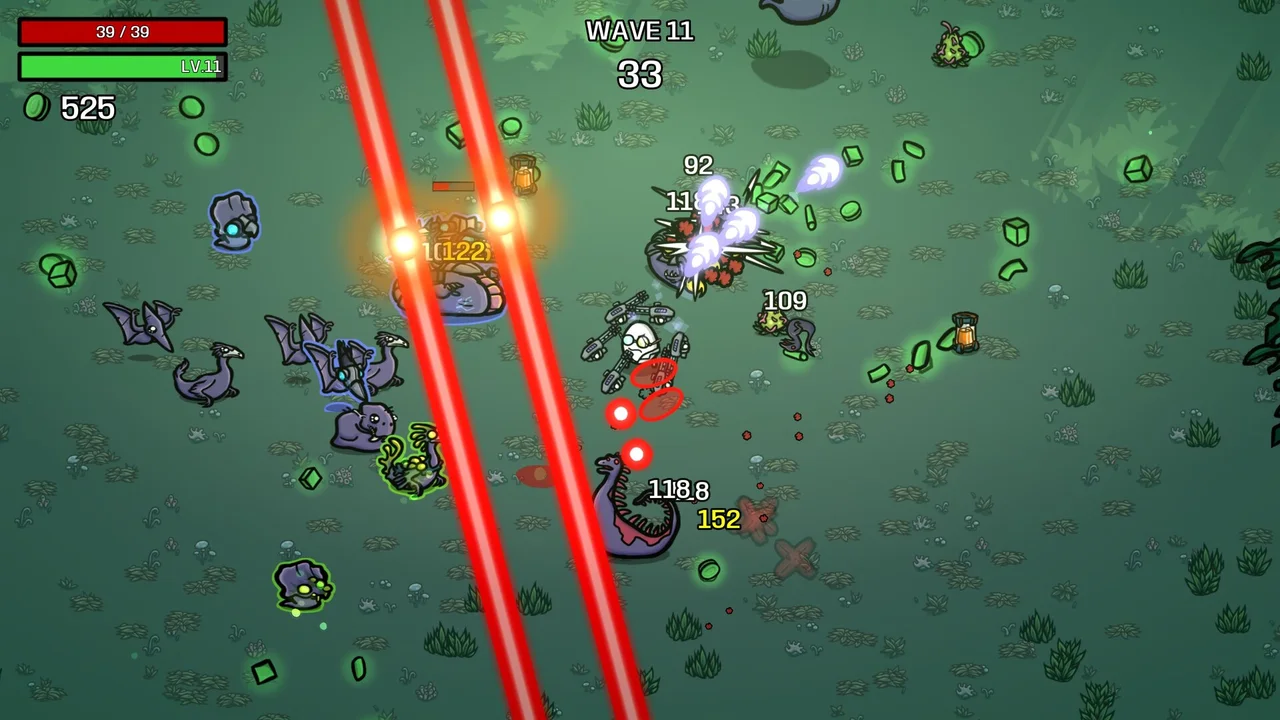
Start with the payoff, then price in the enemy
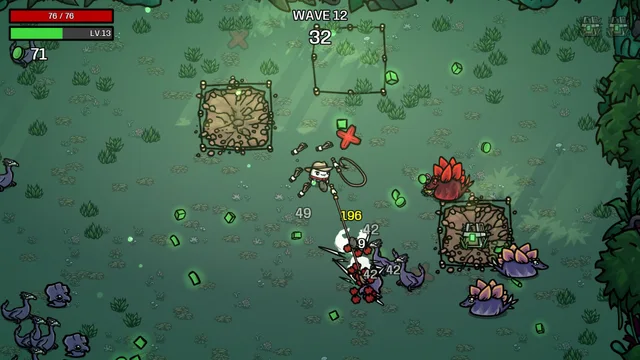
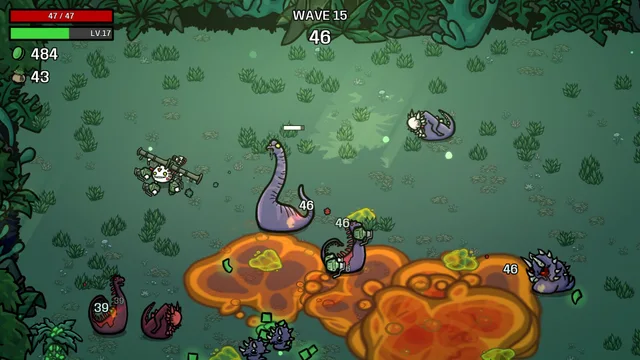
Evolution is the new fork in Primal Dread’s run planning. The developer describes Mecha as reinforcing weapons and adding stats, while Mutation copies item effects. Each direction also changes the opposition. That makes the choice more interesting than picking whichever side sounds more powerful: the reward and the battlefield belong in the same decision.
Our approach is to ask two separate questions. First, what part of this particular run would benefit? Second, what extra demand will that choice put on your movement and attention? A large theoretical benefit is a weak plan if you cannot make use of it before the next dangerous moment. The selector above helps frame those questions; it does not calculate a hidden score.
A comparison you can actually use
| Your question | Mecha lens | Mutation lens |
|---|---|---|
| What am I trying to improve? | Look at the weapon’s present job and the precise reinforcement offered. | Name the exact item effect you hope to copy. |
| What can invalidate the plan? | The improvement does not solve your actual combat problem. | The copied effect has a restriction or interaction you have not checked. |
| What should I observe? | Whether the same target becomes easier to handle without taking worse positions. | Whether the intended effect behaves as expected, rather than merely making the inventory look stronger. |
Use this comparison as a reading aid. No universal stat order follows from the path’s name. An unreliable weapon needs a different correction from a reliable weapon that simply lacks damage, and an interesting item interaction needs more evidence than an ordinary direct bonus.
Read the whole offer, not just the attractive line
At the choice screen, pause long enough to identify the recipient, the size of the change and any condition. Does the text refer to one weapon, every weapon, a particular item, or an effect triggered under specific circumstances? Record what it actually says. If the scope is unclear, leave it as an open question instead of silently granting the most generous interpretation.
This matters most when planning several steps ahead. A later combination is not a reason to accept an awkward present choice unless the missing pieces are obtainable and the run can reach them. Prefer an improvement with a visible job over an imagined interaction that requires several unverified assumptions.
Make your first comparison readable
For an introductory experiment, keep the rest of the setup familiar where possible. Write down the character, difficulty, chosen direction and the problem you wanted to solve. Then note one useful observation after each wave: a target you struggled to remove, a hazard that closed your route, or an effect that failed to activate when expected.
One good run cannot prove a path is better. Enemy situations and shop offers vary. A useful record instead helps you explain why a choice worked in that situation. If several things changed at once, treat the result as an exploratory run, not a clean comparison.
Know when the original plan stops helping
Reassess when your bottleneck changes. A run that began short on damage may later lose health because you are being boxed in. Buying more of the original solution can leave the new problem untouched. Before spending again, state the present failure in plain language: “I cannot clear a lane,” “I stay near danger too long,” or “I cannot tell which effect is doing the work.”
Keep the answer modest. Sometimes the next improvement is a clearer movement route or a more readable test, rather than a larger commitment to the same idea. Our editorial preference for first sessions is understanding one interaction well enough to repeat it; high-variance experiments can come after that foundation.
BEFORE THE NEXT WAVE
Pack one good plan.
0 / 5 steps checked
A FEW USEFUL ANSWERS
Before you go.
Which Evolution path is best?
No tested universal winner is established here. Compare the current offer with your inventory and the hazards you can manage.
Does the selector know my inventory?
No. It turns your stated goal into a qualitative planning prompt. It does not inspect the game or simulate damage.
Are exact breakpoints available in this guide?
The reviewed pre-unlock developer material does not publish enough numeric detail to establish breakpoints or a legal maximum.
SOURCE REVIEW / 2 NOVEMBER 2026
Source notes.
Source review, before unlock. Officially announced systems, with our original planning advice. Exact launch values and unlock tasks await the released game.
- Developer: Primal Dread and Evolution — 8 October ↗The two Evolution directions and their associated enemy hazards.
- Primal Dread — official Steam listing ↗Publisher content outline, base-game requirement and launch date.
- Brotato — official base-game reference ↗The underlying run, weapon and shop structure; not a DLC balance reference.