Check the current request before selling its last component
Scholar Kevin offers item requests that can reward Stamps and lead to another request. That makes an ordinary-looking reagent potentially useful for a concrete progression goal. Read the current request rather than hoard every item on the chance that it appears someday. We would reserve the actual quantity needed and identify what completing that request would let you do next. When deciding between duplicates, distinguish one that finishes an active task from an indefinite “might be useful.” That is a practical way to preserve progress without turning storage into a second unsorted inventory.
Keep ingredients for recipes you intend to make
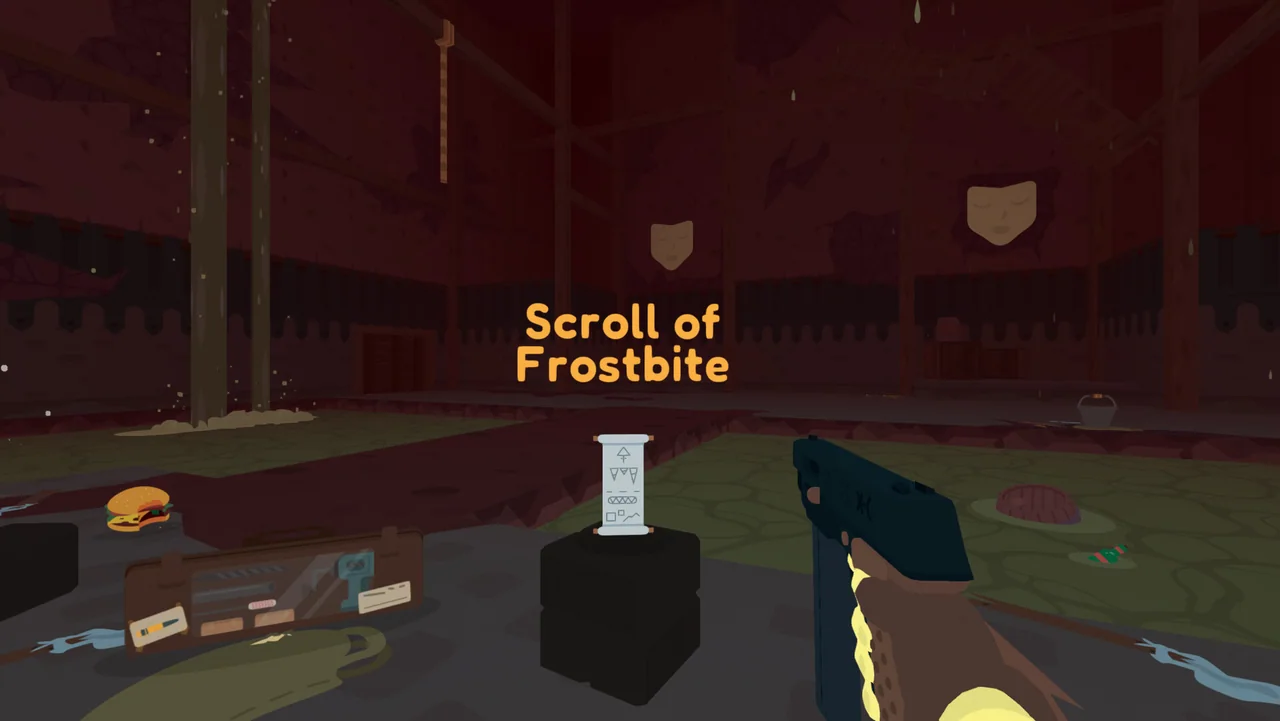
Choose one or two useful upcoming crafts and store their missing and available components together in your own plan. A loose ingredient has value when it completes something you can use; it is less helpful when you cannot name the result or access the required station. We would compare a component needed for healing with a duplicate collected out of habit. The cooking guide and scroll finder provide specific starting points. Once a recipe reserve is satisfied, additional copies become a new choice rather than an automatic claim on every remaining space.
Separate the restart reserve from the active experiment
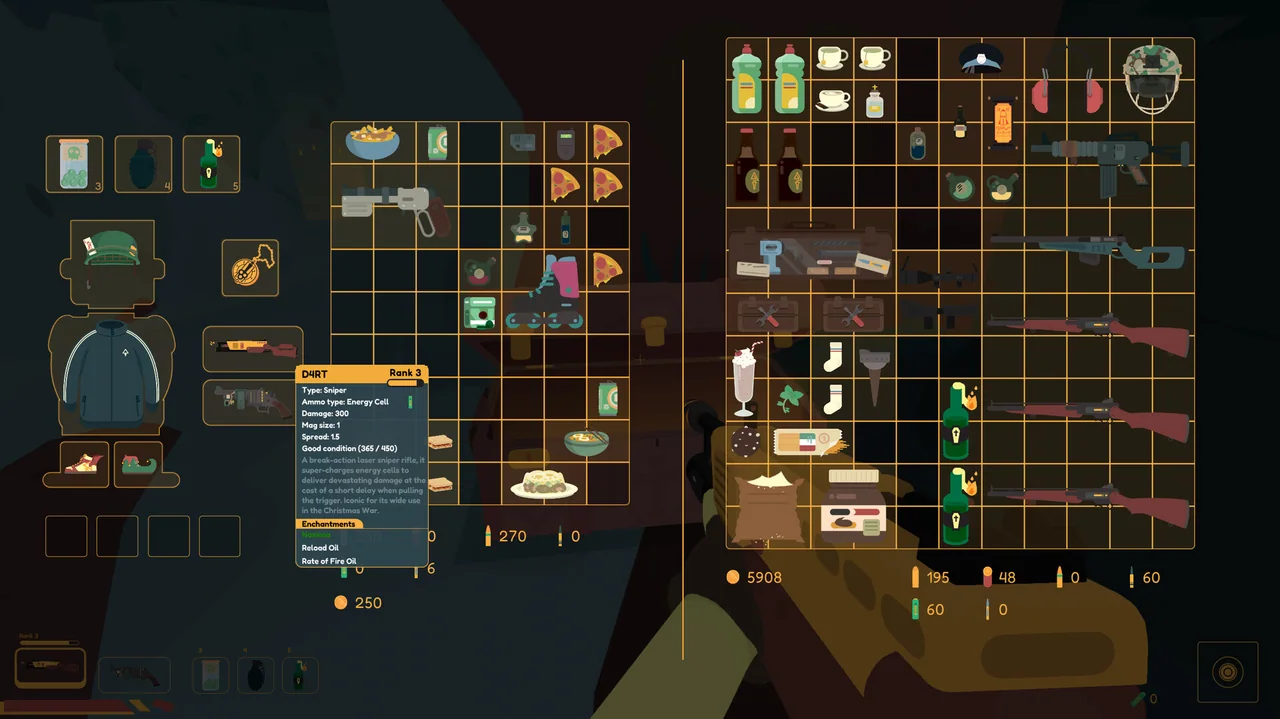
Bank a modest weapon option, compatible ammunition and usable supplies before concentrating resources in a demanding build. Storage supports keeping money and ammunition as well as loose items. We would avoid carrying every reserve merely because the present route still feels comfortable. A replacement should be something you can actually equip and supply, not an impressive gun with no matching ammunition left. Review that reserve after consuming a rare component or changing caliber. The conversion guide helps identify when an equipment decision has quietly made an old ammunition stash less useful.
Plan Telia’s sacrifice separately from ordinary selling
Telia accepts a rank-five gun for replication access, consuming that specific weapon in exchange for the ability to manufacture an unmodified version later. That gives a fully progressed spare a possible role beyond its sale value. We would decide whether you want repeatable access to the weapon model before giving it up, and keep a separate gun ready for the next outing. Recover attachments you want to retain before the sacrifice through the relevant service. Replication access does not store the completed enchantment build or turn the sacrificed copy into an emergency recovery item.
Sell according to the next expense
Name the expense the sale will fund: a repair, a refill or another planned preparation. Then compare surplus items against that goal. We would begin with duplicates that have no active request, recipe or loadout role instead of selling the final component of an imminent improvement. Read the current offered price rather than rely on an old chart, especially after balance updates. A nominally valuable item can still be an awkward reserve if it needs further spending to become useful. Keep the decision tied to the next run you can actually prepare, not to an imaginary perfect collection.
Leave storage readable for the next visit
Before leaving the Church, identify the active loadout, the restart reserve and the ingredients saved for a named craft. You do not need to reorganize every container perfectly to make those three things easy to find. Bank the money and ammunition you intend to preserve, then check what remains on the character. Review one category of unnecessary duplicates after each return rather than delay every decision until space is exhausted. The extraction guide connects that organization to carried risk: an item helps future progress only when it reaches the place you meant to keep it.
TAKE ONE PLAN INTO THE NEXT RUN
Your next-run checklist.
0 / 6 checked
Temporary checklist. Reloading clears your ticks.THE QUICK ANSWERS
Clear the next question.
Should I keep every ingredient in case it becomes useful later?+
We would reserve known recipe components and current-request quantities first. Keeping some flexibility is sensible, but an unnamed future possibility should not automatically displace a usable restart kit or supplies for the next outing.
Does Telia preserve the exact modified weapon I sacrifice?+
No. The referenced service consumes the rank-five gun and unlocks manufacture of an unmodified version for a cost. Decide whether that future access is worth the present copy, and recover wanted attachments before committing the sacrifice.
SOURCES & VERSION
Where this field note comes from.
Source review: 2 Nov 2026. Developer patch context: 1.0.2. We distinguish current patch notes from wiki reference details and historical Early Access material.
- Official wiki — Kevin’s item requests ↗Requests, Stamps and why specific ingredients may have an immediate progression role.
- Official wiki — weapon replication ↗Rank-five sacrifice and unmodified replacement access; no invented insurance behavior.
- Official wiki — storage and banking ↗Banking recovered loot, money and ammunition; no guarantee of a container spawning on any particular run.