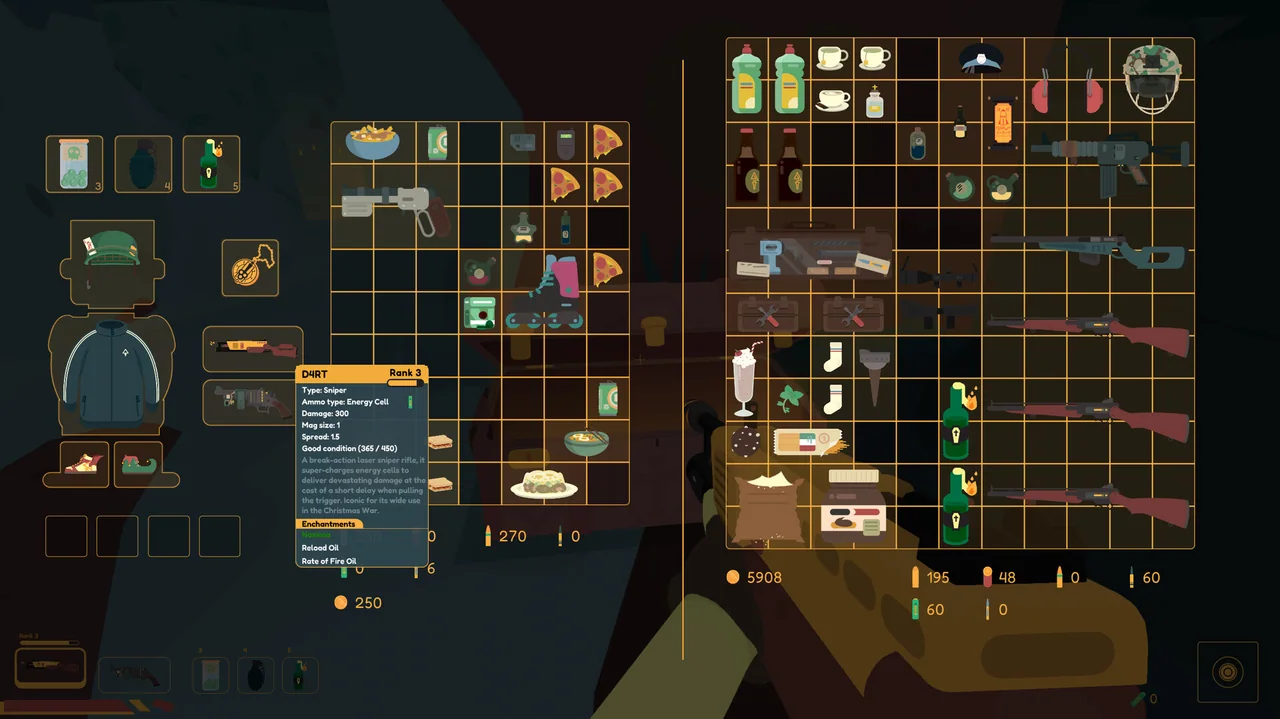

Compare recovery duration with the danger you expect
Read the current consumable card before packing by habit. Total healing and time to deliver it answer different questions: a slow recovery may help between encounters but leave the next sudden hit unanswered. Launch balancing changed recovery durations, so old recipe lists are not a reliable timing reference. We would carry a practical mixture based on the health problems you actually encounter. Keep a readily accessible option for an urgent recovery and use slower food when the situation gives it time. Avoid treating a future cooking opportunity as a substitute for healing you can consume now.
Match the ingredient name before troubleshooting a recipe
Similar-looking ingredients need not be interchangeable. The Sashimi and Unagi references explicitly distinguish Fish from Salted Fish in the recipes that call for the former. Read the item names rather than rely on the picture or assume any fish-shaped item belongs in the same slot. We would gather the ingredients for one known result, then check the cooking station before adding a more ambitious combination. When a recipe fails, compare the exact inputs and quantities first. That is more useful than repeatedly adding extra valuable ingredients to a mixture whose first assumption was wrong.
Use a small Sashimi recipe to understand the process
The referenced basic Fish recipe uses two Fish to make one Sashimi. That gives you a simple example with an easy inventory check. Larger batches have their own yields, and the page warns that some require a larger stove, so do not extrapolate a simple “one extra ingredient, one extra meal” rule. We would begin with the small confirmed recipe and inspect the result before committing a full reserve. If ingredients have another planned use, consider that opportunity cost too. Cooking is preparation for the next run rather than a requirement to process every ingredient immediately.
Unagi shows why cooking space matters
The Unagi reference lists Fatberg Chunk, Fish and Rice as a recipe producing two portions, with a 4×4 stove requirement. The item also has an Electric-resistance effect in its description. These are separate reasons you might choose it: the ingredients available, the station you can use and the kind of route you are preparing for. We would check all three before reserving the components. Do not pack around a benefit remembered from an old video without reading the finished food's current card, especially when recovery timing and other consumable values have changed.
Keep prepared food and future ingredients in different roles
Arrange usable recovery so you can find it quickly, then reserve the ingredients that complete a named future recipe. A bag full of possibilities can still leave little room for the supplies you need during the next encounter. We would compare the space taken by a raw batch with the result you intend to carry, without assuming every recipe reduces that space. Leave some inventory flexibility for useful discoveries. The keep-or-sell guide helps prioritize the rest of the loadout instead of making food compete with every duplicate weapon and loose component.
Consume with room for the recovery to matter
Use healing when it can affect the next exchange, not merely because the health bar is a little below full. Current launch notes also clear remaining health-regeneration buffs on reaching full health, which gives unnecessary early consumption a cost. We would reassess after each encounter: how much recovery remains, what threats come next and whether returning would bank a useful result. If the prepared food is nearly gone, do not let a full inventory turn the next fight into an obligation. The run-risk checklist connects recovery, equipment and the available return route.
TAKE ONE PLAN INTO THE NEXT RUN
Your next-run checklist.
0 / 6 checked
Temporary checklist. Reloading clears your ticks.THE QUICK ANSWERS
Clear the next question.
Can I trust healing seconds listed in an Early Access recipe guide?+
Check the current in-game card. Recovery duration was rebalanced at launch, so an older recipe may still identify useful ingredients while giving timing that no longer describes the item you are about to consume.
Why does a larger batch produce something different from the example?+
Recipes can have specific ingredient, quantity and stove-size requirements. Read the exact batch entry instead of scaling a small example arithmetically. Similar names such as Fish and Salted Fish can also be a source of mismatched inputs.
SOURCES & VERSION
Where this field note comes from.
Source review: 2 Nov 2026. Developer patch context: 1.0.2. We distinguish current patch notes from wiki reference details and historical Early Access material.
- Official wiki — Sashimi recipes ↗Exact Fish inputs, batch differences and warnings about larger cooking grids; old healing-time values are excluded.
- Official wiki — Unagi recipe ↗Fatberg Chunk, Fish and Rice recipe, cooking-space requirement and resistance property; verify current consumable statistics in-game.
- Perfect Random — official 1.0 launch notes ↗Primary launch corrections for scroll removal and consumable recovery. Older item statistics are not treated as current when these developer notes supersede them.