Inside this field note +
Let the first errands introduce the world
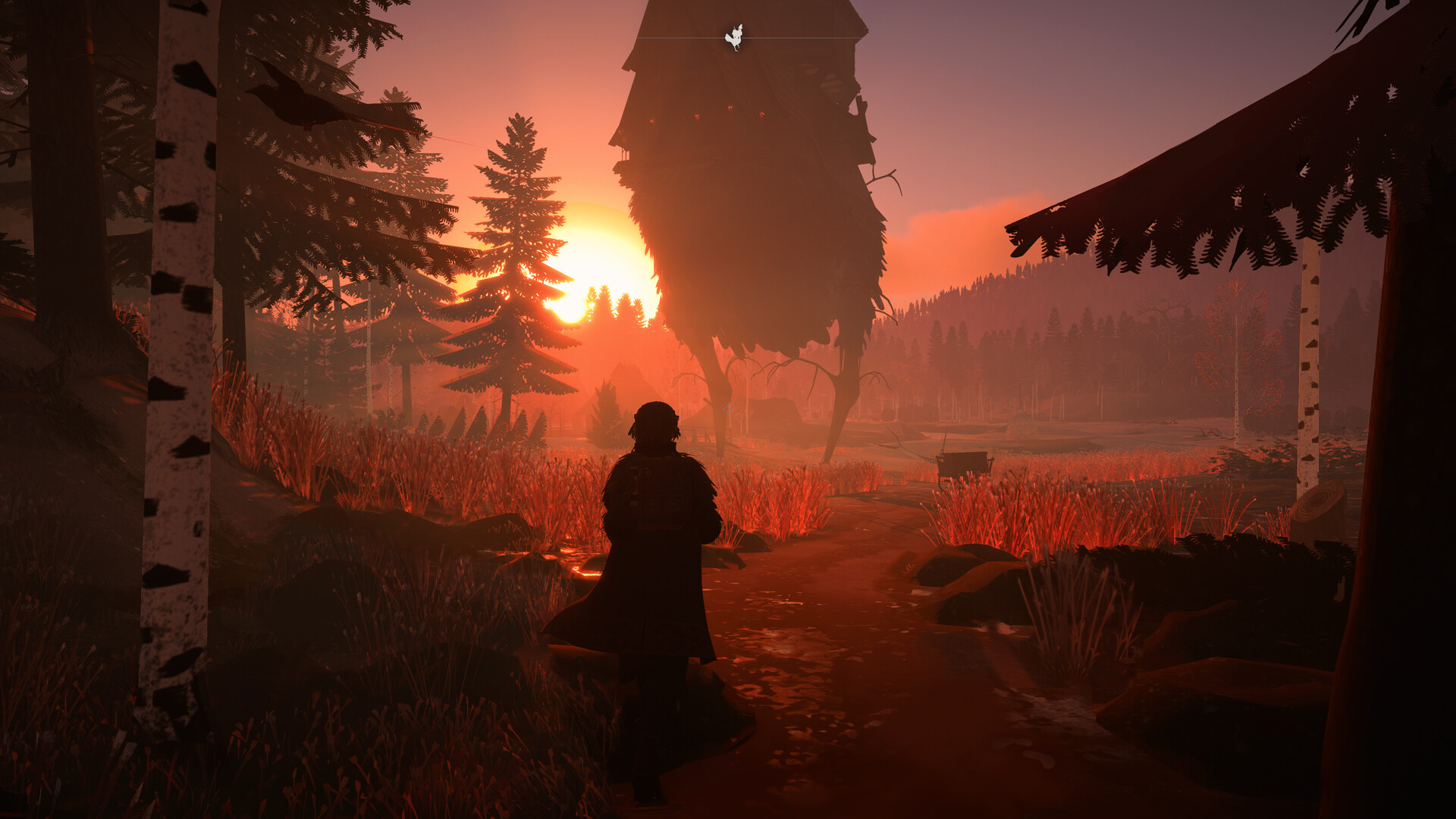
The community opening reference begins with the Merchant, then the road into Kopnik and the witch’s house. The recipe book near her entrance is an important handoff: it accompanies the journal and crow-tool introduction. If a familiar-looking action is unavailable, return to the active conversation and the object it asks you to collect before assuming the game expects a complicated workaround.
Our recommendation is to give that first circuit a purpose. Read the request, take the relevant tool and gather what advances the current lesson. You can notice an attractive clearing or another villager without converting every discovery into an immediate obligation. A short note about where you want to return is enough.
Gather for a named need
Crows can reach ingredients that are awkward to collect by hand, including honeycomb in trees. Practice aiming at a visible, relevant target before sending them repeatedly around the whole scene. The useful question is whether the item satisfies the current request or a recipe you intend to make. A growing inventory is less helpful when you cannot explain which task it supports.
Keep a small distinction in your notes between ingredients already held and ingredients merely seen. That prevents a promising tree on the outward walk from becoming an imaginary supply when you return home. Use the field journal to record your own next gathering stop.
Give the lantern a question to answer
The tools reference describes the Oil Lantern as a way to highlight nearby items of interest. Try it where you already suspect something worth examining, rather than treating the entire forest as a timed search grid. Watch the response, inspect the nearby scene and move on when you have answered the question. This is a way to make exploration more deliberate without publishing invented coordinates or a promise that every glow leads to the same reward.
Learn one tool’s useful feedback at a time. A beautiful object in the landscape, a marked errand and an item you can currently collect are different kinds of discovery.
TRY THIS NEXT · AN EDITORIAL PRACTICE
A short first circuit
Notice
Read the active request and identify the tool it expects.
Try
Gather one useful ingredient, then check that it is actually held.
Remember
Write the next conversation or ingredient still missing.
Aim for a usable first home
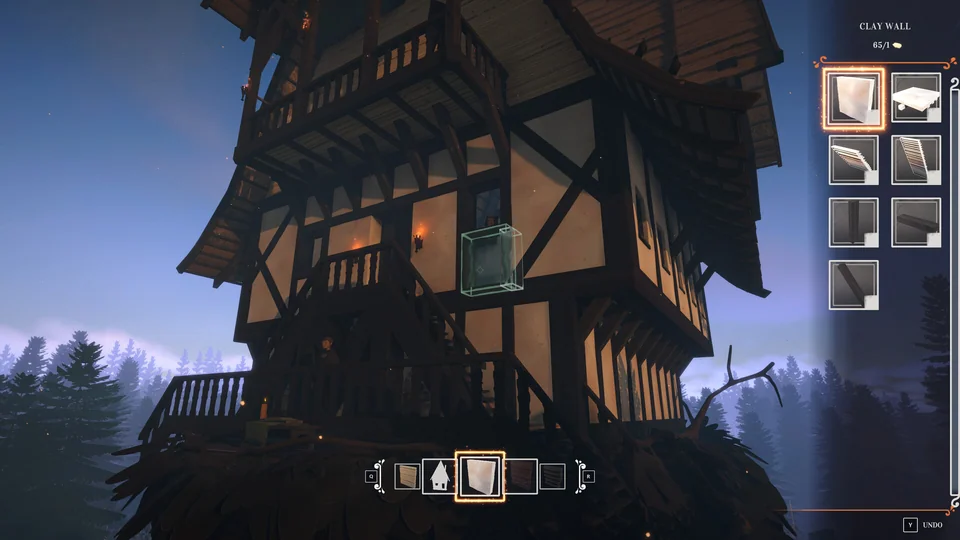
The opening hut ritual leads into building. You do not need an elaborate showpiece before the house can become the centre of your routine. Start with a layout you understand: an entrance you can find, a clear route through the room and space around the activities you return to often. Furnishing can then answer a real need instead of hiding an awkward first layout.
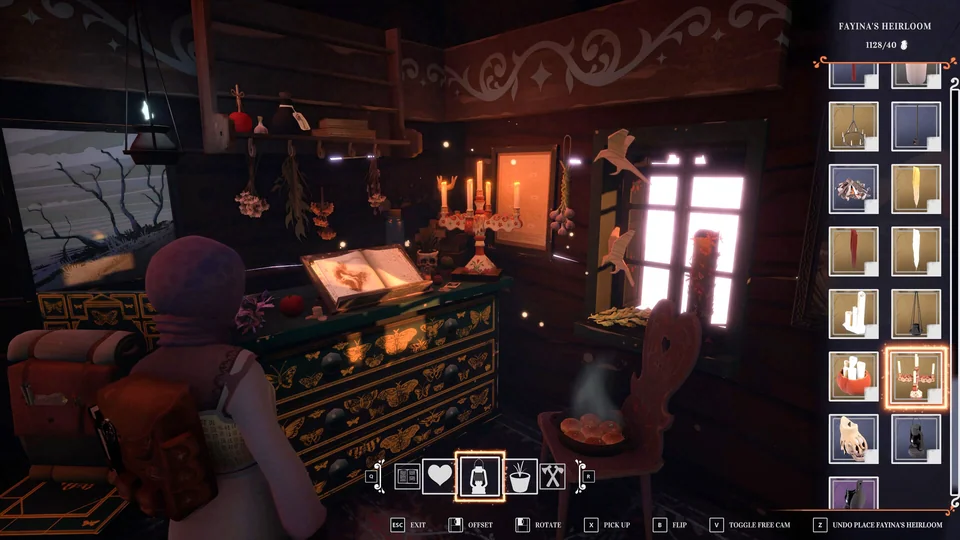
Keep a note of the next building improvement you want to make, and leave it there while you explore. The house guide explains the current chair options and the difference between planning a footprint and filling it.
Close nearby promises before departing
The opening quest reference warns that leaving the starting map prevents returning to that opening area. Treat the actual departure dialogue as a moment to pause. Check the villagers you meant to revisit, a reward you have not collected and any small discovery you deliberately postponed. This is a preparation check, not a claim that every object or achievement in the completed game is permanently missable.
Choose what matters to your playthrough. Finishing a modest local promise can be more satisfying than trying to exhaust an unverified online checklist. Record the remaining names or requests in your own words so you can recognise the right conversation.
Leave yourself one clear next step
Version 1.0 introduced background autosaving with an adjustable frequency. Read the current saving settings and feedback, then end a session with a short practical note: the person to speak to, the ingredient still missing or the room you want to adjust. A useful note explains the next action; it does not need to retell the whole evening.
Our browser journal is a companion to that habit. Its checkmarks organise preparation and never certify that a REKA quest is complete. Keep the game’s own journal and dialogue as the authority for what your character has actually achieved.
FOLD INTO YOUR POCKET
Before the next outing.
- Read the active request before gathering.
- Collect the recipe book and learn the crow tool.
- Distinguish ingredients held from ingredients merely seen.
- Leave a clear route through the first house.
- Revisit chosen opening errands before departure.
A FEW SMALL ANSWERS
Questions by the hearth.
Why can I see honeycomb but not reach it?+
The reviewed ingredient reference uses the crow tool for honeycomb high in trees. Check that the opening tool introduction is complete, then aim at the intended target.
Must I build a huge cottage immediately?+
No fixed size is prescribed here. We recommend a usable layout first, then improvements driven by the routine you actually enjoy.
Does this route reveal the ending?+
It covers opening preparation and tool use. Later story outcomes and final rewards are not described.
Where these notes began.
Named mechanics follow the reviewed sources. Our exercises, planning diagrams and working order are editorial guidance. Current developer notes take priority over stale release labels; no completed Cobalt playthrough is claimed.
- Community REKA Wiki — Starting Out ↗Opening sequence and recipe-book/tool unlock. The wiki retains some Early Access labels.
- Community REKA Wiki — Tools ↗Crow gathering, lantern, talisman and temporary animal-conversation tools.
- Community REKA Wiki — Trial of the Chicken ↗Opening hut ritual and first-map departure context; no complete 1.0 walkthrough is claimed.
- Emberstorm — REKA 1.0 is now live ↗26 October 2026: completed story, building improvements and autosaving.
- Community REKA Wiki — Honeycomb ↗Crow gathering and distinct ingredient uses; item-page naming differs from some broad recipe labels.