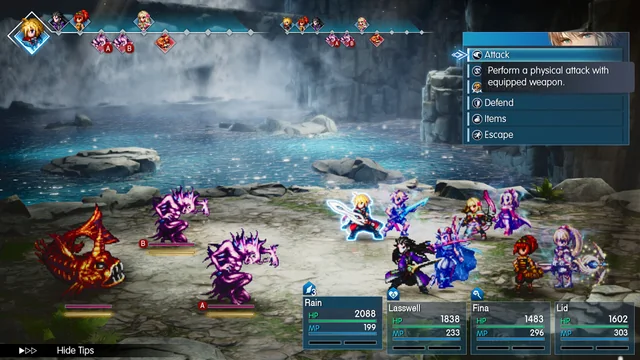

Separate the equipped Vision from learned options
Square Enix confirms that each character equips one Vision. Fighting develops the relationship and unlocks abilities; learned abilities can remain equipped after changing Visions, within the applicable cost limit. Treat those as two planning decisions: what you need immediately, and what you want to carry into a later setup.
This guide is source-based editorial advice, not our own damage test. We recommend choosing a concrete weakness in your party before changing equipment. “The next enemy acts before I can recover” is a useful problem. “My favorite Vision should be stronger” does not yet identify what the replacement must do.
Build a coverage sheet instead of a tier-list party
| Function to preserve | Question for your setup | Reason to change a Vision |
|---|---|---|
| Recovery | Who can restore the party when the opening goes wrong? | The only recovery user is repeatedly unavailable at the critical moment. |
| Stagger coverage | Can someone exploit the next encounter’s known weakness? | Your commands cannot address the target you are preparing for. |
| Damage payoff | What benefits from the opportunity you create? | You survive and break enemies but struggle to finish them. |
| Backup utility | What remains if the preferred actor cannot help? | A single disabled ally makes the entire plan collapse. |
This is not a demand for one dedicated character per row. It is a way to notice when several appealing offensive choices leave the same practical gap.
Compare named capabilities, not familiar faces
The official examples give Leah a recovery-and-support identity, while Tronn offers fire, ice and lightning magic. If those Visions are available, compare the specific missing function before equipping either. The same decision method applies to later unlocks without pretending that a chapter-one recommendation remains universally best.
Run a replacement through two questions: what problem does this solve, and what useful option disappears? A new elemental answer can be worthwhile, but replacing your only reliable recovery plan carries a different cost. Keep a backup arrangement you understand instead of rebuilding every slot after one difficult encounter.
Choose a learning goal before spending scarce upgrades
The firsthand PlayStation feature distinguishes battle-driven mastery from magicite awakening. Before committing to an upgrade, open the relevant progression information and identify the next benefit you actually intend to use. A material should solve a stated problem or move you toward a useful learned option, not merely make a menu look complete.
Our approach is to keep a short learning queue: one immediate goal, one later experiment and a reason for each. If a Vision is present only to gain progress, check that the active setup still handles the current dungeon. Development that repeatedly prevents completion is not automatically efficient.
Make a small, readable comparison
Change one assignment before a familiar encounter. Compare survival, the ability to answer weaknesses and how often a needed command is unavailable. Those observations are more actionable than judging solely by the highest single hit.
Before restoring a previous Vision, inspect learned abilities and their cost budget. Learning does not mean every desirable option fits at once. Keep each choice for a reason—recovery, coverage or payoff—and reassess before the next unfamiliar fight.
TAKE THIS INTO YOUR NEXT SESSION
Your checklist.
Tick items as you go. This checklist stays in the current page and resets when you reload.
QUICK ANSWERS
Before your next session.
Which Vision is best for every party? +
We do not claim a universal winner. Compare the next challenge with the functions already covered and the useful option a replacement would remove.
Should I replace the whole party after a loss? +
Start with one diagnosed failure and one controlled change. A complete rebuild makes it difficult to identify which adjustment improved the encounter.
SHOW THE WORK
Sources & review.
Reviewed 30 October 2026. Mechanics and progression notes were checked against the sources below. Our preparation order, checklists and recommendations are Cobalt’s editorial advice. Later patches or unresolved source disagreements may change a route.